When comparing ASTM A270 and EN 10357, it’s important to highlight that ASTM A270 covers both seamless and welded tubing, using stainless steel grades like 304 and 316 for versatility across food, beverage, and pharmaceutical industries. In contrast, EN 10357 focuses solely on welded tubes with grades 1.4401 and 1.4301, emphasizing rigorous hygiene standards. Understanding these differences can guide your choices in sanitary stainless steel tubing for specific applications. There’s more to explore to make an informed decision.
When comparing ASTM A270 and EN 10357, you'll find that both standards serve essential roles in the production of stainless steel tubing for hygienic and process applications. However, they differ greatly in scope and specifications.
| Feature | ASTM A270 | EN 10357 |
|---|---|---|
| Standard Origin | USA | Europe |
| Main Industries | Food, pharmaceutical | Food, beverage, chemical |
| Tube Construction | Seamless and welded | Seamless and welded |
| Common Materials | Stainless steel grades 304, 316 | Stainless steel grades 1.4401, 1.4301 |
| Dimensional System | Imperial and metric | Metric |
| Typical Surface Requirements | Ra 32 µin | Ra 0.8 µm |
| Main Markets | North America | Europe |
| Common Fitting Systems | Tri-Clamp, Welded | DIN fittings |
| Typical Buyer/Application | Sanitation and processing | Hygiene and industrial |
Both standards aim to ensure high-quality surface finish and dimensional tolerances that meet the stringent requirements of their respective industries.
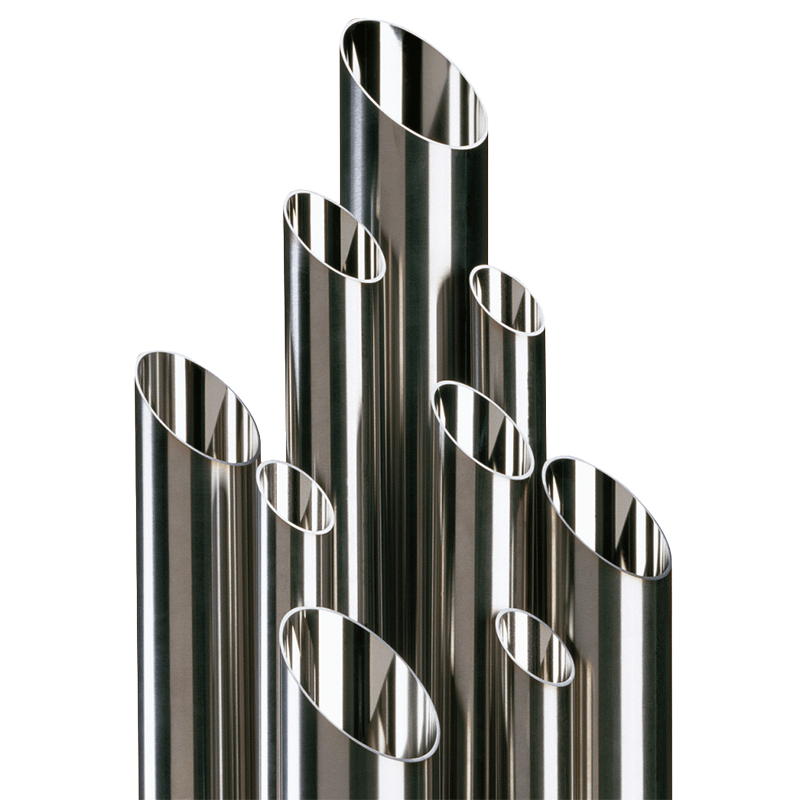
ASTM A270 sanitary tubing is designed for various industries, particularly those requiring high levels of cleanliness, like food and beverage, pharmaceuticals, and biotechnology. This standard specifies the requirements for seamless and welded stainless steel tubing, ensuring consistency in quality and performance. Understanding these specifications helps you select the right tubing for your application needs. Additionally, it is manufactured in accordance with ASTM A270 requirements, which emphasizes critical hygiene and corrosion resistance.
Sanitary stainless steel tubing, specifically ASTM A270, finds its primary applications in industries where hygiene and cleanliness are paramount. You’ll commonly see this food grade stainless steel tubing utilized in food processing, beverage production, and dairy processing. Its corrosion resistance and ease of cleaning make it ideal for brewery systems, ensuring that unwanted contaminants are kept at bay. Additionally, pharmaceutical applications often specify ASTM A270 to meet stringent sanitary requirements for fluid handling. Other hygienic fluid systems also leverage this tubing, as it provides the necessary assurance of safety and compliance with health standards. By choosing ASTM A270, you're ensuring that your operations maintain the highest levels of hygiene and efficiency. Furthermore, this tubing is manufactured to meet various industry standards ensuring quality and reliability in every application.
While you may be familiar with the importance of sanitary tubing in various industries, understanding what ASTM A270 specifies is vital for guaranteeing compliance and quality. This standard outlines significant aspects for hygienic stainless steel tubing, including:
Additionally, ASTM A270 addresses dimensions, wall thickness, heat treatment, surface condition, testing, and proper marking and documentation. By adhering to these specifications for stainless steel sanitary pipe, you can guarantee that your tubing meets stringent hygienic standards essential for industries like food and pharmaceuticals. Understanding these specifications empowers you to make informed decisions in your operations. Furthermore, the use of high-purity TP304L and TP316L stainless steel ensures optimized welding performance and enhanced durability of the tubing.
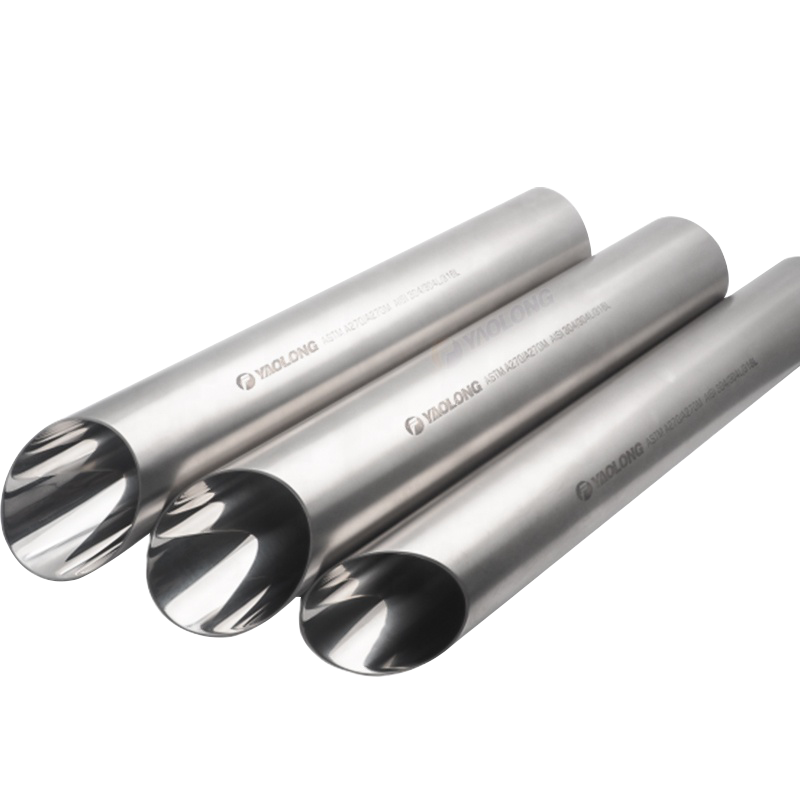
EN 10357 stainless steel tubing is specifically designed for the food and chemical industries, featuring longitudinally fusion-welded construction. This standard outlines critical aspects such as dimensions, tolerances, and surface characteristics, ensuring compliance in sanitary applications. Understanding its relationship to DIN 11850 can further clarify its role in industry piping systems. Additionally, the tubing's ability to undergo electropolishing for higher purity makes it suitable for applications requiring stringent hygiene standards.
In various industries, the demand for high-quality tubing is critical, and EN 10357 stainless steel tubing stands out for its superior hygienic properties. This standard is vital in sectors where sanitary tubing standards and hygienic process piping are paramount. Here are some key industries that commonly use EN 10357:
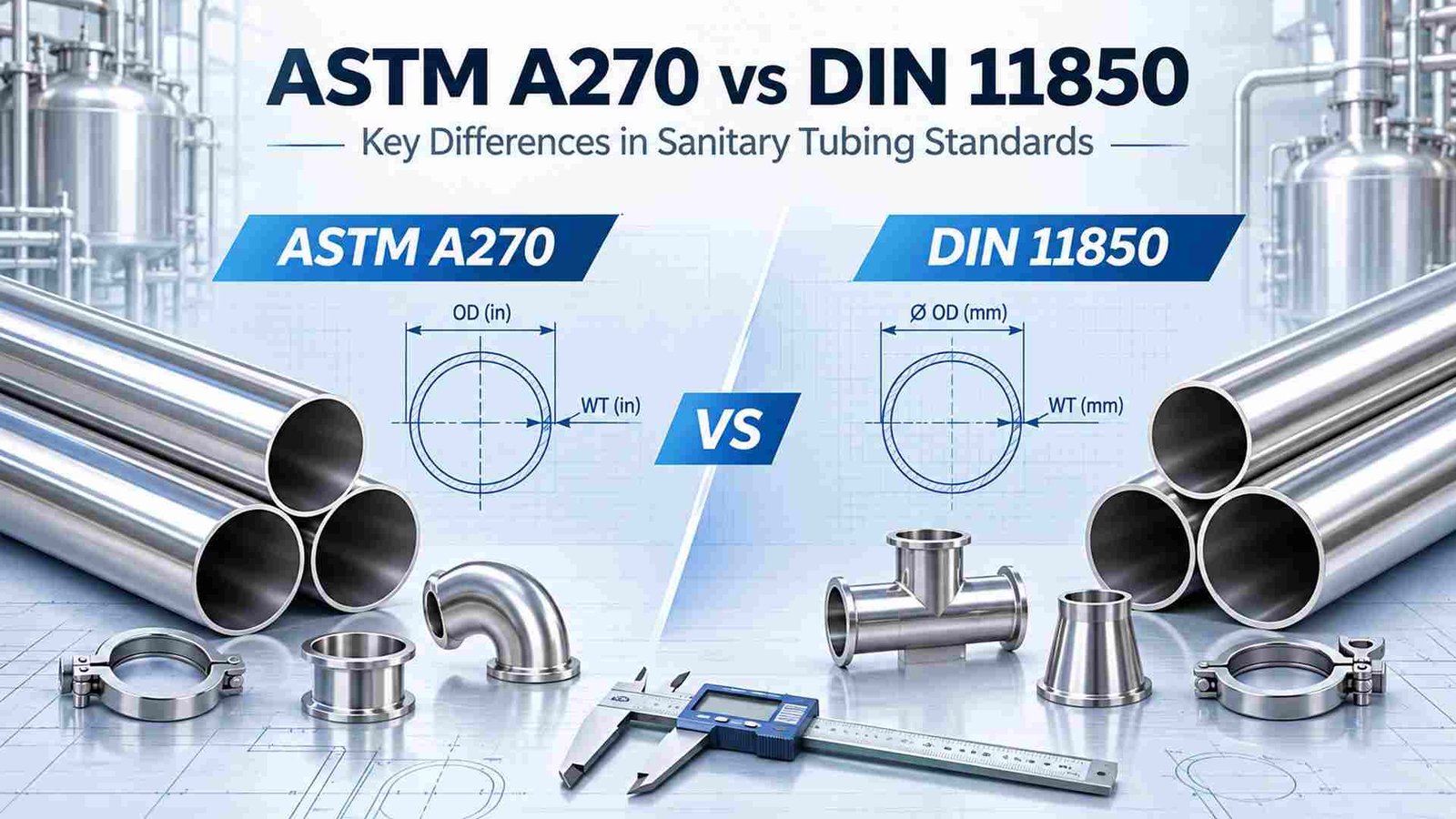
The relationship between EN 10357 and DIN 11850 is significant for those involved in industries relying on sanitary stainless steel tubing. EN 10357 supersedes the older DIN 11850 system, expanding and modifying the dimensional framework to better meet modern requirements. While EN 10357 dimensions are now the standard, you may still encounter specifications, drawings, fittings, or legacy projects that reference DIN 11850. This is essential for you as a buyer to understand, as compatibility can affect your procurement and installation processes. Additionally, awareness of ASTM A270 dimensions is beneficial, as both EN 10357 and ASTM A270 serve distinct applications in the sanitary tubing market. Maintaining this knowledge will guarantee your projects remain compliant and efficient. Furthermore, it is important to note that DIN 11850 standards ensure compatibility across projects, which can be crucial for seamless integration in existing systems.
In this section, you'll learn about the specific types of tubing covered under ASTM A270 and EN 10357 standards. Understanding these scopes is essential for ensuring compliance in your applications. Additionally, you'll see why the construction of the tube plays a significant role when comparing these standards. The choice of tubing standard can affect ASME BPE stainless steel sanitary tube quality and performance, particularly in biopharmaceutical applications.
ASTM A270 sets forth the scope for sanitary stainless steel tubing, encompassing various constructions that meet rigorous industry standards. This standard allows for both seamless and welded tubing, ensuring flexibility in manufacturing processes. When considering ASTM A270, keep these key points in mind:
EN 10357 specifically focuses on longitudinally fusion-welded stainless steel tubing, providing a clear framework for the manufacturing and quality standards applicable to this type of tubing. This standard guarantees that the tubing is suitable for use in sanitary applications, where hygiene and structural integrity are critical. Additionally, it is essential that the tubing complies with international standards to ensure its effectiveness in the dairy and food processing industries.
| Type of Tubing | Manufacturing Process | Standard Application |
|---|---|---|
| Longitudinally Welded Tubing | Fusion-welding with strict quality control | Sanitary fluid transport |
| Material Specifications | Stainless steel grades defined in the standard | Food, beverage, and pharmaceutical industries |
| Dimensional Tolerances | Specific tolerances for diameter and wall thickness | Compliance with industry needs |
Understanding the scope of EN 10357 helps you ascertain that the tubing meets the necessary requirements for your applications.
While it might seem straightforward to compare standards based solely on diameter, doing so overlooks critical factors that influence the performance and suitability of stainless steel tubing. Understanding these aspects can help you make informed decisions for your projects:
Additionally, factors like intended service and project specifications play crucial roles in determining the appropriate standard. By considering these elements, you can guarantee the tubing you select meets the unique demands of your application, ultimately providing better control over performance and safety. Moreover, the choice of stainless steel grades can significantly influence the corrosion resistance and suitability for specific applications in the tubing standards.
When comparing ASTM A270 and EN 10357, it’s crucial to understand the equivalent grades, particularly 304 and 304L, as well as 316L and its European counterparts. You'll find that 304L is often favored for its lower carbon content, while 316L is preferred in more corrosive environments. Understanding these differences will help you choose the right material for your hygienic applications. Additionally, selecting the appropriate material grade can enhance overall product quality through effective cleaning and maintenance processes.
Understanding the differences between ASTM A270 and EN 10357 material grades, particularly with 304 and 304L equivalents, is vital for guaranteeing compliance with project specifications. Common cross-references include:
While these designations may seem interchangeable, nominal equivalence doesn't assure that all certification or project requirements align perfectly. Variations in mechanical properties, corrosion resistance, and manufacturing standards can lead to significant differences. As a result, it’s important to verify that your selected material not only meets the grade requirements but also adheres to specific project certifications. Conducting thorough research guarantees that you're making informed decisions that align with your project's needs, ultimately avoiding costly errors down the line. Additionally, understanding surface finish options is crucial as it impacts the tubing's performance in specific applications.
Although the choice between ASTM A270 and EN 10357 material grades for 316L can seem straightforward, it is essential to recognize the nuances that distinguish them. The EN standards reference various stainless steel grades, specifically 1.4404, 1.4432, and 1.4435, which correspond closely to the 316L grade in ASTM A270. Understanding these distinctions can help you make informed decisions for your applications. Additionally, selecting the appropriate grade ensures compliance with sanitary standards and optimal performance in beverage processing.
| EN Grade | Description |
|---|---|
| 1.4404 | Equivalent to 316L, with better corrosion resistance |
| 1.4432 | Similar to 316L, but with a higher molybdenum content |
| 1.4435 | Offers enhanced resistance in aggressive environments |
Choosing the right grade guarantees peak performance in sanitary applications.
Which grade should you choose for hygienic applications: L or 316L? The decision hinges on several factors tailored to your specific needs:
Also, evaluate corrosion requirements, welding capabilities, project specifications, and lifecycle costs. Both grades have unique advantages, making your choice dependent on the specific conditions and requirements of your project. Understanding these factors empowers you to make an informed decision tailored to your needs. Additionally, consider the high-quality manufacturing standards that both grades must meet to ensure performance in various applications.
When comparing ASTM A270 and EN 10357 dimensions, it's essential to understand the specific tube sizes each standard offers. While nominal sizes may seem equivalent, they don't always guarantee the same outside diameter, which is important for ensuring compatibility with hygienic fittings. This difference in dimensions can greatly impact system efficiency and sanitation in applications. Additionally, adhering to high-specification stainless steel tubing is critical for maintaining the integrity of fluid delivery systems in the semiconductor industry.
Understanding the differences in tube sizes between ASTM A270 and EN 10357 is vital for selecting the right sanitary stainless steel tubing for your application. ASTM A270 primarily focuses on OD-based sanitary tubing, offering both inch and metric designations. Common sanitary sizes usually include:
Wall thickness selection is important, as it affects the tubing's pressure rating and structural integrity. You’ll often find wall thicknesses ranging from 0.020" to 0.120" (or 0.5mm to 3mm). When selecting your tubing, make sure you consider both the sizes and wall thicknesses to meet your specific application requirements effectively. Additionally, it is crucial to ensure that the tubing complies with 3-A Sanitary Standards to maintain hygiene and safety in dairy processing.
While both ASTM A270 and EN 10357 provide essential guidelines for sanitary stainless steel tubing, EN 10357 introduces a defined dimensional series that enhances consistency in manufacturing. This system has undergone revisions, altering the series compared to earlier editions. Understanding these dimensions is vital for ensuring compatibility and performance in your applications. Additionally, adhering to industry standards for material selection, such as the use of TP 304/304L and 316/316L stainless steel, is crucial for optimal performance.
| Dimension Series | Tube Size (mm) |
|---|---|
| 1 | 10 |
| 2 | 20 |
| 3 | 30 |
| 4 | 40 |
| 5 | 50 |
These defined sizes help you maintain control over your projects, ensuring that your tubing meets stringent industry standards while facilitating easier integration into existing systems.
Although nominal sizes may suggest uniformity between ASTM A270 and EN 10357, this is often misleading due to differences in their respective dimensional standards. Here’s what you need to know:
Understanding these differences allows you to make informed decisions when selecting sanitary stainless steel tubing, ensuring peak performance and reliability in your projects.
The variation in outside diameter between ASTM A270 and EN 10357 has significant implications for the performance of hygienic fittings. For clamp fittings, precise diameters guarantee secure connections, preventing leaks. Ferrules must match outside diameters to maintain integrity during sterilization. Elbows and tees, critical for fluid direction, require compatible dimensions to facilitate smooth flow. Reducing fittings must align perfectly to avoid turbulence, while valves depend on exact measurements for reliable operation. In orbital welding, discrepancies in diameter can compromise weld quality, leading to contamination risks. Prefabricated pipe spools also demand accurate outside diameters for seamless integration into systems. Ultimately, understanding these variances allows you to maintain control over your sanitary processes and guarantee compliance with standards. Additionally, sanitary seamless tubes are preferred for high-pressure applications due to their uniformity and pressure ratings.
When comparing ASTM A270 and EN 10357, you'll notice key differences in dimensional tolerances that can impact your application. You'll want to pay close attention to outside diameter tolerance, wall thickness tolerance, and ovality, as these factors are essential for maintaining dimensional consistency. Understanding these specifications guarantees that your sanitary stainless steel tubing meets the necessary performance standards. Additionally, adherence to ISO 9001 Quality Management System Certification ensures that the manufacturing process maintains high standards of quality and accuracy.
While both ASTM A270 and EN 10357 provide guidelines for outside diameter tolerances in sanitary stainless steel tubing, the differences in their specifications can greatly impact various aspects of system design and assembly. You'll want to reflect on how these tolerances affect:
Understanding these differences helps you maintain control over the quality and performance of your systems, guaranteeing they meet both regulatory standards and operational requirements. Moreover, ensuring adherence to ASTM A270 standards can significantly enhance the overall performance of stainless steel tubing in critical applications.
Wall thickness tolerance is a critical factor that influences the performance and reliability of sanitary stainless steel tubing. When you consider welding parameters, variations in wall thickness can lead to inconsistent heat input, potentially compromising joint integrity. For system pressure calculations, precise wall thickness guarantees accurate assessments of pressure ratings and safety margins. If the wall thickness is inconsistent, it can affect the overall weight of the tubing, which may impact handling and installation. Additionally, fabrication consistency relies heavily on uniform wall thickness; any deviations can cause challenges in assembly and increase the risk of defects. Consequently, understanding these tolerances helps you maintain control over your project’s quality and performance.
Achieving ideal ovality and dimensional consistency is essential for the functionality of sanitary stainless steel tubing, especially in automated fabrication and hygienic fitting systems. When these characteristics are compromised, you can face significant operational challenges, including:
Both ASTM A270 and EN 10357 offer specific tolerances for ovality and dimensional consistency, but their standards vary. Understanding these differences helps you select the right tubing for your application, ensuring peak performance and compliance with hygiene standards. Additionally, the customization process plays a crucial role in achieving the required specifications for your tubing needs.
When comparing surface finish requirements, ASTM A270 offers specific options that cater to various applications, while EN 10357 outlines distinct surface conditions. It's crucial to understand whether the same Ra value is equivalent under both standards, as this can impact your project’s compliance and performance. By examining these differences closely, you can guarantee the suitability of your stainless steel tubing for sanitary applications.
In the domain of sanitary stainless steel tubing, understanding the surface finish options specified by ASTM A270 is essential for guaranteeing compliance and performance in various applications. The surface finishes play a critical role in maintaining hygiene and preventing contamination.
Key options include:
When ordered, roughness requirements must meet specific standards to guarantee peak functionality. By paying attention to these surface finish options, you can better control the quality and performance of your sanitary stainless steel tubing. Additionally, meeting the sanitary standards outlined by ASTM A270 ensures the safety and reliability of the tubing in food processing applications.
While ASTM A270 provides essential guidelines for surface finishes in sanitary stainless steel tubing, EN 10357 goes further by defining specific internal and external surface characteristics along with roughness conditions. The 2022 edition of EN 10357 introduces updated provisions for surface finish and roughness, ensuring enhanced clarity and control in manufacturing processes. You'll find that EN 10357 categorizes surface finishes based on defined parameters, which help in achieving consistent quality and performance. It also specifies minimum roughness values for both internal and external surfaces, thereby minimizing the risk of contamination and ensuring compliance with sanitary standards. This level of detail enables you to make informed decisions when selecting materials for critical applications.
How can two tubes with similar Ra values differ considerably in their overall quality? While Ra (roughness average) is a key metric, it doesn’t capture the full picture. Variations in manufacturing processes, weld treatments, and surface topology can lead to significant differences in performance and reliability.
Consider these factors:
These elements, alongside documentation and acceptance criteria, play critical roles in ensuring that the tubing meets your specific standards for quality and safety. Additionally, resources such as data sheets can provide essential insights into the specifications and performance metrics of the tubing.
When specifying sanitary stainless steel tubing, it's essential to understand the differences between mechanical polishing, bright annealing, and electropolishing. Each finishing method offers unique characteristics that affect the tubing's performance and suitability for various applications. You'll need to evaluate factors like surface finish requirements, corrosion resistance, and cleaning ease to determine the best option for your needs.
Bright annealed tubing is an essential component in industries requiring high levels of cleanliness and corrosion resistance. This process involves controlled atmosphere heat treatment, which minimizes oxidation and enhances the internal surface appearance. Key aspects include:
While bright annealed tubing is known for its reflective finish and internal cleanliness, mechanically polished tubing offers a different approach to achieving hygienic standards. This method involves abrasive finishing techniques that effectively reduce the Ra (roughness average) value, enhancing surface smoothness. Both the internal diameter (ID) and outer diameter (OD) can be polished, guaranteeing thorough hygiene. The result is a surface that minimizes bacterial adhesion, vital for sanitary applications in industries like food and pharmaceuticals. Mechanically polished tubing meets stringent cleanliness requirements while providing a cost-effective solution. By choosing this type of tubing, you guarantee reliable performance and maintain control over your hygienic processes, making it a viable alternative for your specific needs.
Electropolished tubing represents an advanced method for achieving superior surface finish and hygiene compared to both mechanically polished and bright annealed options. This technique employs electrochemical surface removal, resulting in a smoother microscopic profile.
Benefits of electropolished tubing include:
These features make electropolished tubing ideal for environments where sterility and material integrity are paramount. By opting for this finish, you’re ensuring better performance and longevity in your systems, giving you greater control over operational outcomes.
How do you choose the right finish for your sanitary stainless steel tubing? Base your decision on the specific application rather than solely on appearance. Mechanical polishing offers a smoother surface, making it suitable for environments where minimal bacterial adhesion is essential. Bright annealing, on the other hand, enhances corrosion resistance and maintains a clean finish, ideal for hygienic applications. Electropolishing provides the best surface finish, effectively removing surface contaminants and enhancing the tubing's lifespan, which is critical in pharmaceutical and food processing industries. Consider factors such as cleanliness, corrosion resistance, and regulatory compliance when specifying a finish. Each option has distinct advantages, so aligning your choice with the intended application guarantees peak performance and longevity. Additionally, ensure compliance with ASTM A270 or ASME-BPE standards to meet the rigorous demands of high-purity environments.
When comparing ASTM A270 and EN 10357 tubes, it is crucial to understand the differences in welded versus seamless tube production. You might wonder if welded tubing compromises quality, especially in sanitary applications. This discussion will clarify these manufacturing processes and their implications for performance and reliability.
While both ASTM A270 and EN 10357 tubes are produced using welded manufacturing techniques, their approaches to strip forming, longitudinal welding, and subsequent processes reveal key differences.
In addition, the sizing practices differ, with ASTM A270 emphasizing dimensional accuracy for specific applications. Understanding these nuances helps you choose the right tubing for your sanitary needs.
Building on the understanding of welded tube production, it's important to highlight the distinction in manufacturing methods for seamless tubing under ASTM A270 and EN 10357. ASTM A270 permits seamless construction, providing flexibility in applications where integrity and cleanliness are paramount. This allows for the use of seamless tubes in critical sanitary environments, ensuring fewer potential contamination points. Conversely, EN 10357 strictly focuses on longitudinally welded tubing, which may not meet the same level of performance in highly sensitive applications. The choice between these standards hinges on your specific requirements for tube integrity and application. Understanding these manufacturing differences empowers you to select the appropriate tubing that best suits your operational needs while maintaining compliance with industry standards.
Although some may assume that welded tubing inherently signifies lower quality compared to seamless alternatives, this perspective overlooks critical advancements in manufacturing technology. Modern welded tubing can meet or exceed the performance of seamless options due to innovations in fabrication techniques.
Consider the following enhancements:
These factors contribute to the overall quality of welded tubing, making it a viable choice for sanitary applications. It’s crucial to evaluate the manufacturing process rather than relying on outdated notions about welded products.
When working with sanitary stainless steel tubing, it's essential to understand the testing and inspection requirements that guarantee product integrity. You'll need to focus on dimensional inspection, weld and tube integrity testing, surface roughness testing, and material traceability. Each of these elements plays a fundamental role in maintaining the high standards necessary for sanitary applications.
Dimensional inspection of sanitary stainless steel tubing is essential to guarantee compliance with industry standards and operational efficiency. Achieving precise measurements secures your tubing will function as intended in critical applications. Key aspects to focus on include:
Additionally, examining straightness and surface condition is significant. Straightness affects flow dynamics and installation ease, while surface condition impacts cleanliness and corrosion resistance. By diligently performing dimensional inspections, you maintain control over quality and confirm that your tubing meets all necessary standards.
Weld and tube integrity testing is essential for ensuring the reliability and safety of sanitary stainless steel tubing in various applications. You'll want to employ several methods to verify the integrity of your tubing. Eddy current testing is a non-destructive technique that detects surface and near-surface flaws, ensuring weld quality. Hydrostatic testing, where specified, assesses the tube's ability to withstand internal pressures, confirming its strength and leak-tightness. Additionally, other non-destructive testing (NDT) methods may be required based on your purchase specifications. By adhering to these testing protocols, you can maintain high standards in quality assurance, ultimately leading to enhanced performance and compliance with industry regulations.
Although surface roughness testing may seem like a minor detail, it plays a vital role in guaranteeing the performance and compliance of sanitary stainless steel tubing. You need to understand the key aspects of Ra measurement and where to take these measurements:
When it comes to guaranteeing the integrity of sanitary stainless steel tubing, material traceability is vital for compliance and quality assurance. You need to focus on heat numbers, which link each tube to its specific production batch, allowing for precise tracking. Batch identification is equally important; it guarantees you can trace the origins of materials used in manufacturing. Additionally, you should obtain material test certificates, which validate that the tubing meets specified standards and properties. When applicable, EN 10204 documentation provides further assurance by detailing inspection and testing results. Together, these elements establish a thorough traceability framework, enhancing your control over material quality and compliance throughout the supply chain.
When comparing ASTM A270 and EN 10357 fitting systems, you'll find various hygienic connections that align with each standard. It's essential to understand the compatibility of specific fittings with the tubing standard you’re using. Always verify the tube and fitting standards separately to guarantee peak performance in your sanitary applications.
While ASTM A270 outlines requirements for sanitary stainless steel tubing, it doesn't dictate every fitting standard used in hygienic systems. You’ll find several common connections that are compatible with ASTM A270, ensuring peak performance and hygiene in your processes.
Consider these typical fittings:
Additionally, ferrules are often used to create secure, leak-proof connections. Understanding these options helps you maintain the integrity of your sanitary systems while adhering to ASTM A270 standards.
Although ASTM A270 is widely recognized in the United States for sanitary stainless steel tubing, EN 10357-compliant fitting systems are vital for meeting European hygienic standards. Key systems include DIN hygienic connections, which guarantee secure, leak-proof seals. The DIN 11864 system offers a versatile approach to fittings, accommodating various tube dimensions while maintaining hygienic integrity. Similarly, DIN 11853 systems focus on the design of hygienic fittings, optimizing flow and cleanliness. Clamp systems provide ease of installation and disassembly, important for maintenance. Finally, welded hygienic fittings are favored for their robustness and resistance to contamination. Understanding these systems enables you to select the appropriate fittings that align with your sanitary needs and compliance requirements.
Understanding the compatibility between tubing and fittings is essential for ensuring the integrity of sanitary systems. Just because a tube meets ASTM A270 or EN 10357 standards doesn’t mean the fittings will match. Here's why you must check them separately:
When considering the use of ASTM A270 and EN 10357 tubes in the same system, it is crucial to check specific compatibility factors. You'll need to verify the actual outside diameter, wall thickness, and compatibility of ferrules, fittings, and valves. Additionally, confirm that welding requirements and material grades align for peak performance and safety.
One essential aspect to take into account when working with sanitary stainless steel tubing is the actual outside diameter (OD), especially when determining if ASTM A270 and EN 10357 tubes can be used interchangeably in the same system. Nominal sizes may differ due to variations in manufacturing standards and tolerances. This discrepancy can lead to issues in fitting and sealing, affecting overall system performance.
Consider these points:
Checking wall thickness is essential for ensuring compatibility between ASTM A270 and EN 10357 tubes in a sanitary system. The wall thickness directly impacts the structural integrity and pressure ratings of the tubing. ASTM A270 typically specifies a minimum wall thickness, while EN 10357 may offer variations depending on the grade and application. When integrating these two standards, mismatched wall thickness can lead to improper fittings and potential leaks. Always verify that the wall thickness of both tube types aligns with your system requirements. Failing to do so could compromise the system’s performance and safety. By ensuring consistent wall thickness, you maintain control over the flow dynamics and overall reliability of your sanitary installation.
Although both ASTM A270 and EN 10357 tubes are designed for sanitary applications, their compatibility in the same system largely depends on the existing fittings, ferrules, and valves. You'll need to contemplate how these components interact with each type of tubing, as mismatched dimensions can lead to inefficiencies or leaks.
When integrating ASTM A270 and EN 10357 tubes within the same system, understanding the welding requirements is essential. You'll need to guarantee proper butt-weld alignment to maintain system integrity. Orbital welding can be particularly beneficial for achieving consistent and high-quality welds, especially in sanitary applications. Be cautious of potential mismatches at the tube ends; these discrepancies can lead to weak joints or contamination points. Additionally, consider the wall thickness shifts between the two standards, as these differences can affect the weld strength and heat distribution during the welding process. Addressing these factors will help you achieve peak performance and reliability in your sanitary piping systems.
Understanding the material grade of both ASTM A270 and EN 10357 tubes is essential for guaranteeing compatibility in a sanitary piping system. To make an informed decision, you need to take into account the following factors:
While dimensional compatibility is crucial for fitting components together in a sanitary system, it's not the only factor you should consider. Surface finish and Ra (roughness average) requirements play a critical role in maintaining hygiene and preventing contamination. ASTM A270 and EN 10357 specifications differ in their finish standards, which can impact the overall performance and cleanliness of your system.
| Standard | Surface Finish Requirement | Ra Value (µm) |
|---|---|---|
| ASTM A270 | 20 Ra or better | 0.5 |
| EN 10357 | 25 Ra or better | 0.8 |
| Compatibility | Varies by application | Check specifics |
Understanding these differences guarantees you select the right tubing for peak performance in your sanitary system.
Choosing the right tubing for your sanitary system involves more than just surface finish; it also requires a careful review of project and regulatory requirements. When considering whether to use ASTM A270 and EN 10357 tubes together, prioritize your engineering specifications over any inclination to substitute one standard for another.
Remember to evaluate:
When deciding between ASTM A270 and EN 10357, consider the specific requirements of your project. Choose ASTM A270 for applications needing compliance with U.S. sanitary standards, while EN 10357 may be more suitable for European markets. If your project has a global scope, evaluate the compatibility of both standards to guarantee regulatory compliance across regions.
If your project calls for specific standards, selecting ASTM A270 is often the best choice. This standard is particularly advantageous in several scenarios:
Choosing ASTM A270 guarantees seamless sanitary construction, which is crucial for maintaining hygienic conditions in your processes. Additionally, if your customer documentation references ASTM grades, using A270 not only aligns with their expectations but also reinforces your commitment to quality and precision. By opting for ASTM A270, you gain the control and assurance necessary for successful project outcomes.
For projects that adhere to European specifications, opting for EN 10357 is often the most effective choice. This standard guarantees compatibility with DIN/EN fitting infrastructure, making integration straightforward with existing European systems. If your operation utilizes metric European equipment, EN 10357 provides the appropriate dimensions and tolerances required for seamless installation and performance. Additionally, choosing EN 10357 assures access to thorough material and inspection documentation, which is essential for maintaining compliance and quality assurance in regulated environments. By selecting this standard, you can guarantee that your sanitary stainless steel tubing meets stringent European quality and safety requirements, allowing you more control over your project’s outcomes while minimizing potential complications during implementation.
Choosing the right standard for your global project can be complex, especially when maneuvering between ASTM A270 and EN 10357. International manufacturers often need to supply multiple standards to meet diverse market requirements. To guarantee compliance and control, you should check:
Don’t forget to take into account material designation, certification, and documentation needs. Each project may necessitate a different standard based on specific application requirements and regional regulations. By addressing these factors, you can streamline your supply chain while maintaining quality and compliance across borders, ultimately minimizing risks and enhancing project success. Make informed decisions to maintain the integrity of your global operations.
When comparing ASTM A270 and EN 10357, it's easy to make critical purchasing mistakes. Many buyers focus solely on nominal tube size or assume that 316L grade means the tubes are interchangeable. Additionally, overlooking fitting compatibility and surface finish specifications can lead to significant issues in application and performance.
Understanding the nuances of nominal tube size is vital in selecting sanitary stainless steel tubing, particularly when comparing ASTM A270 and EN 10357 standards. Many make the mistake of focusing solely on nominal sizes without verifying critical specifications.
Here are key points to take into account:
Failing to verify these factors can lead to costly installation issues and compromised system integrity. Always guarantee you're comparing apples to apples to maintain control over your specifications.
Although 316L is widely recognized as a high-quality stainless steel grade, assuming that tubes produced under ASTM A270 and EN 10357 are identical solely based on this designation can lead to significant purchasing errors. The chemical composition, while similar, can vary slightly between standards, affecting corrosion resistance and strength. Additionally, certification processes differ; ASTM A270 requires specific testing for sanitary applications, whereas EN 10357 may not impose the same rigorous criteria. This discrepancy can result in performance differences in critical environments. To guarantee you're making informed decisions, always verify the certification and chemical analysis of the tubes, rather than relying solely on grade designation. Doing so will enhance your control over material quality and suitability for your application.
Failing to reflect on fitting compatibility can lead to significant challenges during installation, especially when comparing ASTM A270 and EN 10357 tubes. Incompatible fittings can create leaks, require costly modifications, and delay project timelines. Here are some key consequences to take into account:
To avoid these pitfalls, verify you thoroughly assess fitting compatibility before making your purchase decisions. Your project's success relies on it.
When specifying Ra (roughness average) for sanitary stainless steel tubing, it’s crucial to define the surface condition clearly, as neglecting this detail can lead to misunderstandings and complications. Keep in mind the distinction between inner diameter (ID) and outer diameter (OD) surfaces. Each requires specific polishing standards, which can impact the Ra values. For instance, an ID may need a different roughness than the OD to meet hygienic requirements. Failing to specify the desired polishing condition can cause discrepancies in product performance and compliance. To ascertain you're getting the right material, always clarify your surface specifications, including whether you're referencing the ID or OD, and detail the polishing condition required for your application.
Misconceptions about the hygienic properties of different standards can lead to costly mistakes in purchasing sanitary stainless steel tubing. It’s vital to recognize that the suitability of a standard like ASTM A270 or EN 10357 depends on your complete process-system specification. Don't assume one standard is inherently more hygienic than the other without considering specific applications.
Key points to remember include:
Substituting standards without proper engineering approval can lead to significant project setbacks and compliance issues. When you consider switching between ASTM A270 and EN 10357, it’s essential to recognize that each standard has specific documentation and approval requirements. Failure to obtain engineering approval can result in non-compliance with safety regulations and product specifications, potentially delaying your project. Furthermore, the lack of proper documentation can complicate audits and inspections, leading to increased liability. Always make sure your team evaluates the implications of substituting standards, including material properties and intended applications. By prioritizing engineering input, you can avoid costly mistakes and guarantee your project remains on track and compliant with industry standards. Don’t compromise on quality and safety; consult your engineers.
What details should you consider including in your Request for Quotation (RFQ) for sanitary stainless steel tubing? A well-structured RFQ guarantees you receive accurate quotes tailored to your needs. Here are key points to include:
Additionally, don’t forget to mention material grade, surface finishes, mechanical and electropolishing requirements, and testing needs. Providing clear details about the quantity, fitting system, application, and destination market will also help vendors deliver precise quotations. A thorough RFQ streamlines the procurement process and enhances control over your project specifications.
When selecting between ASTM A270 and EN 10357 for sanitary stainless steel tubing, it’s crucial to guarantee your choice aligns with project specifications and operational requirements. Start by confirming which standard is specified in your project. Next, identify the outer diameter (OD) and wall thickness needed. Make sure you select the appropriate material grade compatible with your system. Consider the fittings and valves in use, as these can affect compatibility. Verify the required surface roughness (Ra) and determine if you need bright annealed (BA), mechanical polished (MP), or electropolished (EP) finishes. Check what inspection certificate is necessary, and clarify any non-destructive testing (NDT) requirements. Finally, confirm that substitution between standards is acceptable to your stakeholders.
Choosing between ASTM A270 and EN 10357 requires careful evaluation of specific project needs, as both standards serve distinct purposes in the domain of sanitary stainless steel tubing. They aren’t automatically interchangeable, and understanding their differences is essential for effective implementation.
Ultimately, your project specification should dictate the final selection. Material designation alone isn’t sufficient; it’s imperative to take into account tolerances and market conventions. By taking these factors into account, you’ll maintain control over the quality and compatibility of your sanitary tubing system, ensuring peak performance in your application.
Send Yaolong Hygienic your required standard, material grade, tube dimensions, surface finish and application. Our team can help verify ASTM A270 or EN 10357 tubing specifications before quotation.

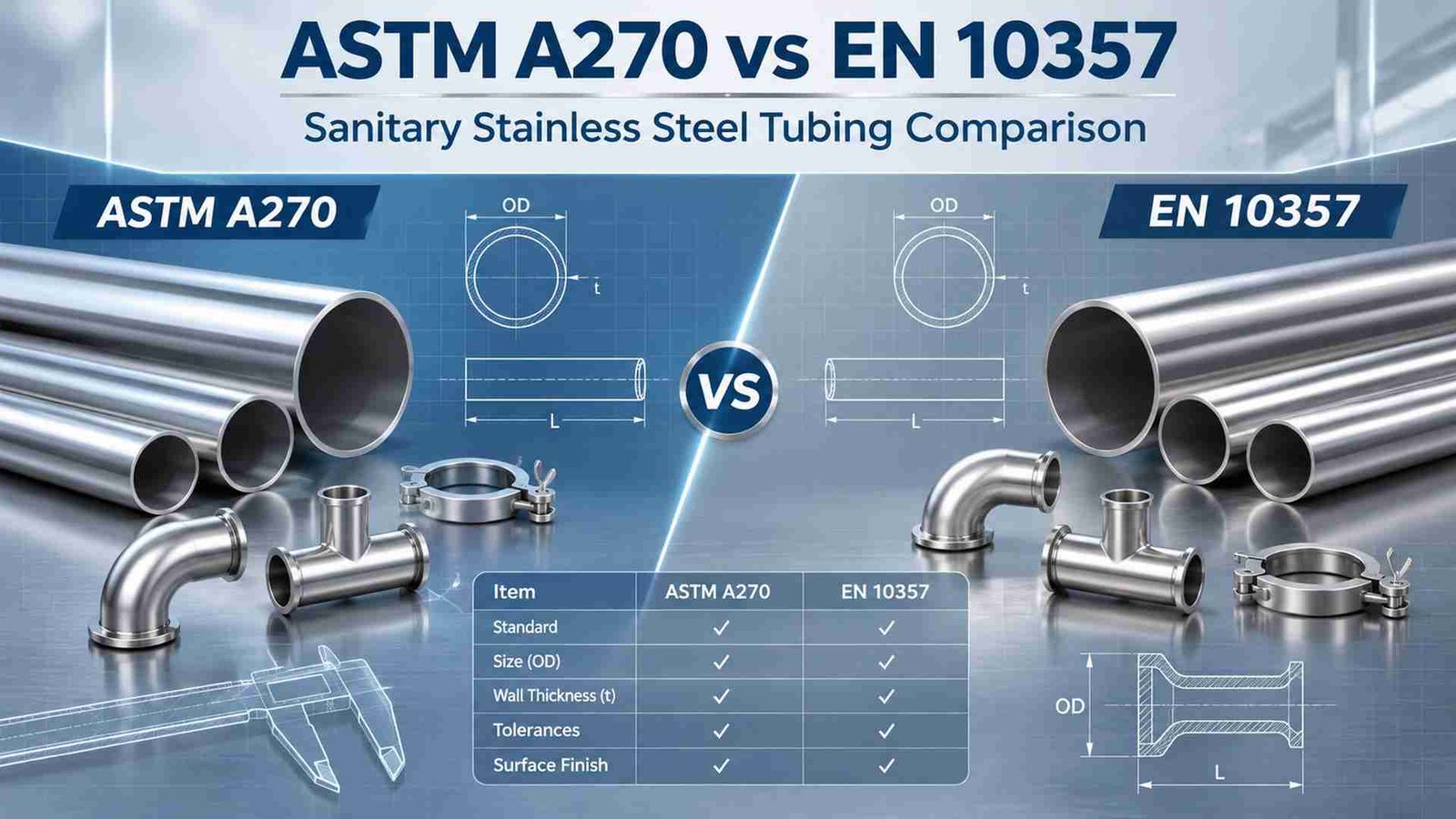
[…] 304L and 316L sanitary tubing, understanding the relevant standards is essential. Standards like ASTM A270, EN 10357 , ASME BPE, DIN 11850 outline specific requirements for material properties and applications in […]