When it comes to selecting the right sanitary tubing standard, you’ll find yourself weighing the pros and cons of ASTM A270 and ASME BPE. Each standard serves different sectors, with ASTM A270 focusing on general applications and ASME BPE catering to the stringent needs of biopharmaceuticals. Understanding the nuances between these two can greatly impact your project's success. But how do you determine which standard aligns best with your specific requirements?
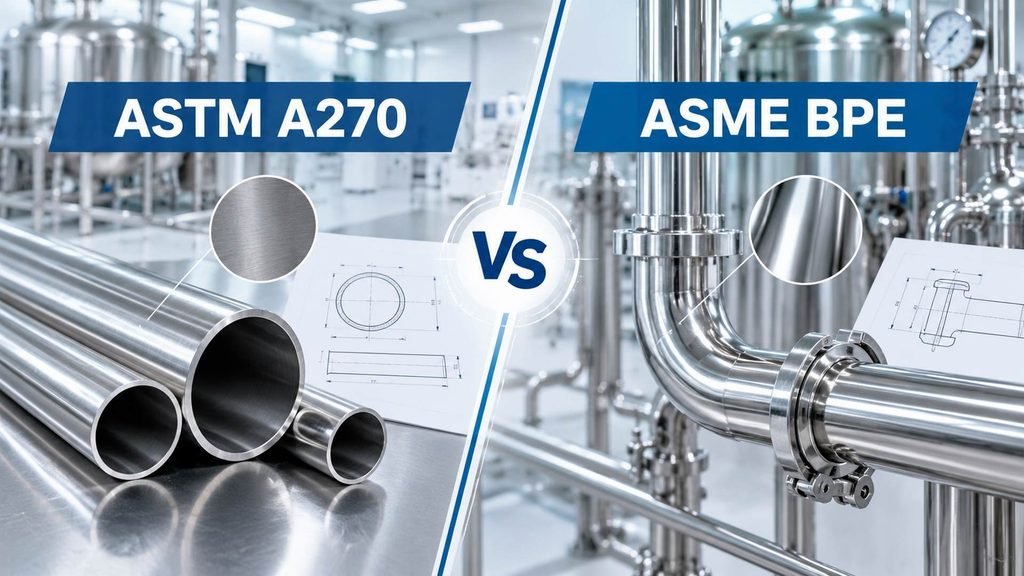
When comparing ASTM A270 and ASME BPE, you'll notice distinct differences that impact your choice of sanitary tubing.
A quick comparison table can clarify specifications, dimensions, and intended applications. Understanding these main differences will help you make informed decisions for your specific needs. Additionally, considering the surface treatment methods used in manufacturing can significantly influence the tubing's performance and suitability for various applications.
A quick comparison of ASTM A270 and ASME BPE reveals distinct standards catering to the sanitary tubing needs of various industries.
ASTM A270 sanitary tubing focuses primarily on general applications in food and beverage processing, while ASME BPE tubing is tailored for biopharmaceuticals and life sciences.
Both standards specify stainless steel grades like 304 and 316L, with ASME BPE emphasizing tighter dimensional and surface finish controls.
Surface roughness expectations differ, with ASME BPE typically requiring lower values.
Weld quality and electropolishing requirements are also stricter under ASME BPE.
Documentation and traceability are critical for both, but ASME BPE has more thorough testing protocols.
Buyers often specify ASTM A270 for less critical applications and ASME BPE for stringent sanitary conditions. Additionally, ASME BPE tubing employs high-purity stainless steel to ensure optimized welding performance and enhanced hygiene.
Though both ASTM A270 and ASME BPE serve crucial roles in sanitary applications, they cater to different scopes within the industry.
ASTM A270 primarily focuses on sanitary stainless steel tubing specifications, ensuring material quality for various applications. In contrast, ASME BPE is a broader standard that addresses high-purity bioprocessing equipment and systems, incorporating detailed hygienic design and fabrication requirements.
While there's some overlap between ASTM A270 vs BPE, they aren't interchangeable. ASME BPE generally demands more extensive documentation and system-level criteria, making it essential for projects requiring stringent purity standards. Additionally, ASME BPE includes rigorous surface treatment requirements that enhance the integrity of the tubing for biopharmaceutical applications.
If you're specifying materials, understanding these distinctions will empower you to choose the right standard, such as ASME BPE sanitary tubing for complex bioprocessing needs.
ASTM A270 sanitary tubing is designed specifically for applications requiring high levels of cleanliness and corrosion resistance.
You'll find it widely used across industries such as food and beverage, pharmaceuticals, and biotechnology, where maintaining product integrity is essential.
This standard covers various stainless steel grades, manufacturing methods, and surface finish options, ensuring you have the right specifications for your needs. Additionally, the tubing is available in welded and seamless options, allowing for versatility in different applications.
When considering sanitary tubing standards for food and pharmaceutical applications, ASTM A270 offers an extensive framework that includes both seamless and welded options.
This standard is particularly relevant for professionals seeking reliable ASTM A270 stainless steel tubing. Key aspects include:
Designed primarily for dairy and food-processing applications, it also encompasses pharmaceutical-quality supplementary requirements.
Additionally, ASTM A270 allows for specified surface conditions, such as mill finish, mechanically polished, and electropolished finishes, ensuring you can meet maximum roughness requirements. Furthermore, it is crucial to ensure compliance with stringent global hygiene requirements to maintain the integrity of critical fluid systems.
In industries where hygiene and safety are vital, ASTM A270 sanitary tubing is fundamental for several key sectors. This standard finds its application mainly in:
| Industry Sector | Description |
|---|---|
| Food Processing | Guarantees safe handling of food products. |
| Beverage Production | Supports sanitary transport of beverages. |
| Dairy Plants | Maintains hygiene in milk processing. |
| Brewery Systems | Facilitates clean production of beer. |
| Pharmaceutical Applications | Meets stringent requirements for drugs. |
The use of bpe 316l tubing or astm a270 tp316l is essential in these industries, as it provides the necessary cleanliness and reliability to prevent contamination. Specifying ASTM A270 guarantees that your operations adhere to the highest sanitary standards. Additionally, hygienic stainless steel tubing is crucial in maintaining the integrity of these processes.
Sanitary tubing adheres to specific standards to guarantee safety and hygiene, and ASTM A270 provides a framework for various stainless steel grades used in these applications.
The most common grades include:
TP304L and TP316L are especially relevant for welded sanitary piping due to their enhanced weldability and resistance to corrosion, particularly in environments requiring stringent sanitary tubing standards. Additionally, these grades comply with ASTM A270 and 3-A Sanitary Standards, ensuring a smooth sanitary tube surface finish, essential for minimizing bacterial growth and maintaining hygiene.
While ASTM A270 sets specific criteria for sanitary tubing, it primarily allows for three manufacturing methods: seamless, welded, and heavily cold-worked welded.
Seamless tubing is produced without joints, offering superior strength and corrosion resistance, making it ideal for high-purity applications.
Welded tubing, on the other hand, is manufactured without filler metal, adhering to strict welding requirements outlined in the standard. This method guarantees a smooth, uniform finish that meets sanitary needs.
Heavily cold-worked welded tubing undergoes significant deformation after welding, enhancing its mechanical properties and surface integrity.
Each method serves distinct applications, so understanding these options empowers you to specify the right type of tubing for your sanitary processes, guaranteeing compliance and performance in your operations. Additionally, proper selection of tubing can significantly influence hygiene standards throughout the production process.
When selecting ASTM A270 sanitary tubing, understanding the surface finish options is vital for meeting specific application requirements. The right finish not only impacts hygiene but also influences flow characteristics and cleaning efficiency.
Here are some finish options you should consider:
It's important to specify both inner diameter (ID) and outer diameter (OD) finishes separately when necessary. Additionally, the internal surface roughness can be tailored down to Ra 0.6 μm for optimal performance in food and beverage applications.
Different applications may demand varying levels of smoothness on each surface, ensuring best performance and compliance with sanitary standards.
Understanding ASTM A270 testing and inspection requirements is essential for guaranteeing the quality and reliability of sanitary tubing in various applications.
These standards mandate a thorough chemical analysis to confirm material composition, followed by mechanical testing to assess strength and ductility. When applicable, reverse flattening tests verify the tubing's structural integrity under stress. Hydrostatic testing guarantees that the tubing can withstand internal pressures without failure.
Additionally, nondestructive electrical testing is employed to detect any hidden defects without compromising the material. Finally, precise dimensional inspection assures that the tubing meets specified tolerances. Moreover, compliance with ISO 9001 Quality Management System Certification enhances the overall quality assurance process, ensuring that products consistently meet stringent safety and technical requirements.
ASME BPE stands for the American Society of Mechanical Engineers' Bioprocessing Equipment standard, which is vital for industries involved in the production of pharmaceuticals, biotechnology, and food.
It covers more than just tubing; it also addresses components, fittings, and design criteria to guarantee sanitary conditions.
Understanding the specific requirements and certification processes associated with ASME BPE is important for compliance and quality assurance in these sectors. Additionally, compliance with high-quality manufacturing standards ensures the reliability and safety of products used in these critical applications.
BPE stands for Bioprocessing Equipment, which encompasses the standards set by ASME for the design and fabrication of systems in industries where hygiene is paramount.
ASME BPE focuses on essential elements that guarantee the integrity and safety of bioprocessing systems. You should consider its standards if your operations demand:
These factors are critical in settings like pharmaceutical and biotechnology environments, where even minimal contamination can lead to significant issues. Additionally, compliance with high-specification stainless steel tubing is vital to ensure contamination-free fluid delivery systems.
The importance of high hygiene standards in bioprocessing and related fields can't be overstated. Industries such as biopharmaceutical manufacturing and biotechnology rely heavily on ASME BPE to guarantee their processes meet stringent hygiene requirements.
You’ll find this standard applied in pharmaceutical production, where contamination can lead to catastrophic failures. High-purity process systems also utilize ASME BPE, particularly in personal-care manufacturing, where product integrity is paramount.
In addition, water-for-injection and purified-water systems demand compliance with this standard to maintain quality. Ultimately, ASME BPE covers other critical hygienic process applications, making it indispensable for any industry aiming for precision and safety in their operations. Adopting this standard gives you the control needed to uphold the highest hygiene levels. Furthermore, the use of sanitary stainless steel tubing is crucial in maintaining sterility throughout the production process.
While many might think of ASME BPE solely regarding tubing, its scope extends far beyond that singular aspect.
ASME BPE provides thorough guidelines that guarantee the integrity and safety of sanitary systems. It addresses essential components that manufacturers need to take into account for peak performance and compliance.
Key areas include:
Additionally, ASME BPE emphasizes the importance of surface finishes to ensure high standards of cleanliness and product integrity in sanitary applications.
Understanding ASME BPE’s tubing requirements is essential for guaranteeing that sanitary systems meet industry standards. You need to evaluate material requirements, as only specific stainless steels are acceptable to maintain corrosion resistance. Dimensional consistency is critical; the tubing must adhere to precise tolerances to confirm effective performance. Surface finish classifications play a significant role, as smoother finishes reduce bioburden and improve cleaning. Additionally, weld quality is non-negotiable; welds must be free of defects to prevent contamination. Cleanliness during fabrication is fundamental for compliance, and traceability is necessary to track each tubing piece through the supply chain. Furthermore, achieving a surface roughness of Ra 0.8 μm is crucial for optimal hygiene in sanitary applications.
ASME BPE certification is essential for manufacturers aiming to demonstrate compliance with specific sanitary standards in the bioprocessing industry.
It’s vital to understand the distinction between manufacturing "to BPE requirements" and holding actual ASME BPE certification.
Consider these key points:
Additionally, manufacturers like Yaolong Hygienic Factory ensure adherence to strict quality control standards to meet industry demands.
When comparing ASTM A270 and ASME BPE, you'll notice several key differences that impact your material choices. The scope of each standard varies, influencing their specific applications across industries. Additionally, you'll find distinct requirements in material grades, tubing dimensions, tolerances, and surface finishes that could affect performance and compliance in your projects. For instance, ASTM A270 is compliant with hygienic standards that ensure the suitability of tubing for applications in sectors such as food and beverage processing.
While both ASTM A270 and ASME BPE serve critical roles in ensuring sanitary practices, they differ greatly in their scope. Understanding these differences can help you make informed decisions for your specifications.
Additionally, the compliance with sanitary standards ensures that both specifications meet the necessary hygiene and safety criteria for beverage processing.
Both ASTM A270 and ASME BPE are pivotal in industries requiring sanitary practices, yet they cater to different applications. Understanding these distinctions helps you specify the right standard for your needs.
| Industry/Application | ASTM A270 | ASME BPE |
|---|---|---|
| Food | Yes | Limited |
| Beverage | Yes | Yes |
| Dairy | Yes | Limited |
| Brewery | Yes | Yes |
| Pharmaceutical | Limited | Yes |
| Biotechnology | Limited | Yes |
| High-purity utilities | No | Yes |
While both standards guarantee cleanliness, ASTM A270 primarily serves the food and beverage sectors, whereas ASME BPE is tailored for pharmaceutical and biotechnology applications, emphasizing high-purity requirements. Additionally, both standards ensure compliance with internationally recognized sanitary standards to maintain product quality and equipment hygiene.
Understanding the material grade requirements is essential for selecting the appropriate standard for your project, as ASTM A270 and ASME BPE specify different grades suited to their respective applications.
Key differences include:
Knowing these distinctions allows you to make informed decisions that align with your project’s requirements. Additionally, the choice of stainless steel grade can significantly impact the overall durability and performance of the tubing in various applications.
Selecting the right tubing standard requires not just a focus on materials but also a thorough examination of dimensions and tolerances. Both ASTM A270 and ASME BPE have distinct specifications that affect your project.
| Feature | ASTM A270 | ASME BPE |
|---|---|---|
| OD | Standard sizes | Standard sizes |
| Wall Thickness | Varies | More consistent |
| Dimensional Control | General tolerances | Stricter tolerances |
| Fitting Compatibility | Common fittings | More specialized |
| Fabrication Implications | Standard methods | Enhanced precision |
While ASME BPE often boasts tighter tolerances, it’s essential to check the specific project requirements to determine the best fit for your needs. Ultimately, understanding these nuances can greatly influence your project's success. Additionally, consider the customization process available for tubing options to ensure they meet specific industry standards.
Surface finish requirements play an essential role in the performance and cleanliness of sanitary tubing, particularly when comparing ASTM A270 and ASME BPE standards.
Understanding these differences helps you make informed decisions. Here are key aspects to take into account:
When specifying surface-finish designations, remember that ASME BPE often requires tighter tolerances and lower roughness values, ensuring peak performance in sanitary applications. Additionally, achieving the desired surface integrity is crucial for hygienic engineering and can significantly affect the overall effectiveness of your piping system.
While both ASTM A270 and ASME BPE standards address surface roughness, they differ markedly in their requirements and implications for sanitary tubing applications.
ASTM A270 typically specifies Ra values but lacks an extensive hygienic standard, making it less stringent for high-purity applications.
In contrast, ASME BPE emphasizes lower Ra values, particularly in systems demanding higher purity, as smoother surfaces reduce contamination risks.
It's important to highlight that specifying a roughness limit alone doesn't guarantee BPE compliance; you must consider additional hygienic design factors.
Consequently, while a low Ra may be vital, it’s only one piece of the puzzle in ensuring your tubing meets the rigorous demands of a sanitary environment. Furthermore, achieving an optimal internal surface roughness (Ra) is critical for preventing biofilm formation and maintaining system integrity.
When evaluating sanitary tubing standards, the choice between mechanical polishing and electropolishing becomes significant, especially following a discussion on surface roughness.
Here are some key considerations:
In evaluating weld quality and weld-bead control, you’ll find notable differences between ASTM A270 and ASME BPE standards that can impact your production processes. Understanding these variations allows you to make informed decisions.
| Criteria | ASTM A270 | ASME BPE |
|---|---|---|
| Manufacturing Weld | Less stringent requirements | High precision and control |
| Weld Bead | May exhibit inconsistencies | Emphasis on uniformity |
| Internal Surface | Acceptable but varied quality | Strict smoothness requirements |
| Discoloration | Tolerable in certain instances | Highly controlled |
| Inspection | Visual checks | Detailed inspection protocols |
These factors directly influence your product's integrity, so choose wisely based on your specific needs.
Weld quality directly influences the effectiveness of heat treatment and bright annealing processes, which play pivotal roles in enhancing the performance of sanitary tubing.
Both ASTM A270 and ASME BPE have specific requirements to guarantee superior results:
Choosing the right standard allows you to guarantee the integrity and longevity of your sanitary systems.
Yaolong's online bright annealing capability offers a controlled environment, further guaranteeing that your tubing meets the stringent demands of your applications.
Cleanability and hygienic design are vital factors in the selection of sanitary tubing, where ASTM A270 and ASME BPE diverge considerably.
ASTM A270 primarily focuses on tube surface requirements, often neglecting extensive system geometry considerations. In contrast, ASME BPE emphasizes the elimination of dead legs and features optimized drainage designs, ensuring effective cleaning.
Additionally, ASME BPE extends its guidelines to cover cleanability in detail, addressing CIP/SIP considerations that enhance sanitation protocols. This is one area where BPE reaches markedly beyond a simple tube specification, providing a more holistic approach to hygienic design. Moreover, the use of high-purity TP304L/TP316L stainless steel ensures that the tubing meets stringent hygienic standards essential for effective thermal exchange.
Choosing the right sanitary tubing involves understanding not just design aspects but also the rigorous testing requirements each standard mandates.
Both ASTM A270 and ASME BPE have distinct testing protocols that guarantee quality and safety. Here’s what you need to take into account:
ASME BPE often includes additional project-specific tests and Positive Material Identification (PMI) when specified, providing an extra layer of assurance. Additionally, ASTM A270 requires compliance with standards such as 3-A Sanitary Standards, ensuring that the tubing meets stringent sanitary requirements.
In contrast, ASTM A270 may not require all these tests, leading to potential variability. By recognizing these differences, you can make informed decisions that align with your project's compliance and performance needs.
While both ASTM A270 and ASME BPE emphasize documentation and traceability, their approaches differ considerably, impacting project costs and sourcing strategies. ASME BPE requires more detailed documentation, which often leads to higher costs. Here’s a comparative look at key documentation aspects:
| Documentation Type | ASTM A270 | ASME BPE |
|---|---|---|
| Material Certificates | Basic requirements | Detailed specifications |
| Heat Number Traceability | Limited | Extensive |
| Inspection Records | Standard | Rigorous |
| Welding Documentation | Minimal | Detailed |
The increased detail in ASME BPE's requirements guarantees better quality control, essential for high-purity applications. This documentation often becomes a major cost differentiator, as sourcing compliant materials involves more thorough verification processes.
When it comes to hygienic piping, the surface finish plays a critical role in preventing contamination and ensuring cleanliness.
You’ll often encounter mechanical polished and electropolished surfaces, each with distinct benefits.
However, it’s essential to evaluate whether a lower Ra value always translates to superior performance in your specific applications.
In the domain of hygienic piping, surface finish plays an essential role in ensuring the integrity and safety of the system.
A well-defined surface finish can greatly impact various aspects of your piping system:
The quality of mechanical polished surfaces greatly influences the performance and reliability of hygienic piping systems. Polishing alters the surface by reducing roughness, enhancing smoothness, and minimizing areas where contaminants can accumulate. This is essential in industries like pharmaceuticals and food processing, where hygiene is non-negotiable.
When specifying tubing, you need to focus on actual measured Ra values rather than relying solely on grit designation. While grit size can indicate surface texture, it doesn’t provide a thorough view of the surface's cleanliness and functional capabilities.
A lower Ra indicates a smoother surface that’s easier to clean and maintain, ultimately leading to better system integrity and product safety. Consequently, you should prioritize precise measurements for ideal performance.
Electropolishing markedly enhances the quality of surfaces in sanitary tubing, making it an essential process for high-purity applications. By removing microscopic surface peaks, you achieve a smoother finish that’s easier to clean.
The process also improves the overall surface condition, enhancing durability and resistance to corrosion. Additionally, electropolishing provides passive surface characteristics that inhibit microbial growth, vital in sterile environments.
Key benefits include:
Choosing electropolished surfaces under ASTM A270 or ASME BPE standards can greatly impact your system's performance and longevity.
How do you determine if a lower roughness average (Ra) is truly advantageous for your sanitary tubing needs?
While a lower Ra can enhance cleanability in certain applications, it’s essential to assess whether those improvements justify the increased manufacturing costs associated with tighter finishes.
Not every process demands the highest level of smoothness; in many instances, a finish that aligns with your specific hygienic requirements is sufficient.
By understanding the particular demands of your application, you can avoid unnecessarily stringent specifications that drive up costs without delivering tangible benefits.
Ultimately, the right choice balances cleanability, cost-efficiency, and the actual hygiene needs of your operation, ensuring you maintain control over your processes and expenditures. Additionally, you can explore data sheets that provide detailed information on surface finishes and their impact on performance.
When choosing between ASTM A270 and ASME BPE for food and beverage applications, consider the specific requirements of your process.
ASTM A270 often proves to be the more practical choice for general sanitary tubing needs, while ASME BPE may be unnecessary unless your application demands stringent adherence to biopharmaceutical standards.
Understanding these distinctions can help you make an informed decision tailored to your operational needs.

While both ASTM A270 and ASME BPE standards serve essential roles in sanitary tubing applications, ASTM A270 often proves to be the more practical choice for specific food and beverage processes.
Its versatility and cost-effectiveness make it ideal for:
When you’re dealing with applications that require a reliable and straightforward system, ASTM A270 offers the performance you need without unnecessary complexity.
Its seamless construction is particularly beneficial for maintaining hygiene, while its availability in various sizes guarantees compatibility across different systems.
Utilizing ASTM A270 can streamline your operations, providing peace of mind in compliance and performance, allowing you to focus on productivity and quality in your food and beverage processes.
Choosing ASME BPE for your sanitary tubing needs might seem appealing due to its higher specification, but this doesn't always translate to better performance or suitability for your specific applications.
If your project doesn’t demand stringent standards, specifying ASME BPE can lead to unnecessary complexity. Increased documentation and tighter project controls often accompany BPE, which can slow down timelines and inflate costs.
Additionally, the heightened surface requirements may exceed what’s needed for your process, complicating inspections and maintenance.
If you're looking to optimize efficiency and manage expenses, ASTM A270 may be a more practical choice. By aligning specifications with actual needs, you maintain control and guarantee that your resources are used effectively without over-engineering.

In pharmaceutical and biotech applications, you'll often find that ASME BPE is favored due to its rigorous standards for cleanliness and sterility.
While ASTM A270 tubing can technically be used, it may not meet the specific requirements necessary for sensitive processes in these industries.
Understanding the distinctions between these standards is essential for ensuring compliance and ideal performance in your systems.

When it comes to pharmaceutical systems, specifying ASME BPE over ASTM A270 often stems from the former's extensive focus on contamination control and high-purity requirements.
ASME BPE provides crucial advantages that align with stringent industry standards:
These features make ASME BPE the preferred choice for systems demanding high-purity utility.
While ASME BPE is often favored for its stringent focus on contamination control, ASTM A270 tubing can still be a viable option for pharmaceutical systems under certain conditions.
ASTM A270 permits the inclusion of pharmaceutical-quality supplementary requirements, making it adaptable to specific project needs. However, whether this tubing is acceptable ultimately hinges on your project specifications.
It's essential to understand that the tubing standard alone doesn't guarantee complete system compliance. You must evaluate the entire system's design and materials to maintain the necessary quality and safety standards.
To summarize, if your specifications clearly outline the required supplementary conditions, ASTM A270 can effectively serve your pharmaceutical applications while still meeting rigorous industry standards.
When considering whether ASTM A270 tubing can meet ASME BPE requirements, it's essential to understand that these standards aren't mutually exclusive.
While ASTM A270 provides a foundation, additional specifications may be necessary for specific applications, and buyers should specify these needs clearly.
Simply stating "BPE tube" on a request for quote (RFQ) could lead to misinterpretations and unsatisfactory results.
Although ASTM A270 and ASME BPE serve different purposes in the domain of sanitary tubing, they’re not mutually exclusive; a single tube can indeed satisfy the requirements of both standards.
However, achieving this dual compliance requires careful consideration:
To guarantee that ASTM A270 tubing meets ASME BPE requirements, buyers must consider a range of additional specifications beyond the basic material compliance.
These include specific stainless steel grades, adhering to BPE dimensions, and guaranteeing defined ID and OD finishes. You'll want to specify a maximum Ra value for surface finish, which is essential for sanitary applications.
Electropolishing can enhance the tubing's cleanliness and corrosion resistance, so consider that in your requirements.
Traceability, inspection, and documentation are critical for maintaining quality assurance throughout the supply chain.
Additionally, don’t overlook packaging and certification to confirm compliance with your standards.
Specifying only "BPE Tube" on a request for quotation (RFQ) can lead to misunderstandings and potentially non-compliant materials.
To guarantee you receive exactly what you need, it's critical to clarify your requirements.
Consider the following:
When comparing ASTM A270 and ASME BPE tubing, you'll notice that BPE often comes with a higher price tag.
This increase can be attributed to several factors, including the cost of materials, more extensive surface processing, rigorous testing and quality control, and detailed documentation requirements.
Understanding these elements will help you appreciate why investing in BPE tubing may be worthwhile for your sanitary applications.
Although both ASTM A270 and ASME BPE standards serve the purpose of providing sanitary tubing for various applications, the cost differences often stem from the specific grade and dimensional requirements associated with each standard.
Here’s what you need to evaluate regarding material costs:
Surface processing plays a critical role in determining the overall cost of sanitary tubing, particularly when comparing ASTM A270 to ASME BPE standards.
BPE tubing typically undergoes more rigorous surface treatments, including mechanical polishing and electropolishing, which enhance cleanliness and reduce particle retention. These processes demand higher labor and material costs, directly impacting your budget.
Additionally, BPE standards often require additional inspections to guarantee compliance with stringent quality criteria. While these steps may increase the upfront expenses, they also contribute to the long-term reliability and performance of the tubing in critical applications.
While both ASTM A270 and ASME BPE standards emphasize the importance of testing and quality control, the costs associated with BPE tubing can be considerably higher due to more stringent requirements.
When considering BPE, you'll encounter several factors that drive up expenses:
These elements contribute to the overall cost of BPE tubing, but they also provide enhanced reliability and safety in high-stakes applications, making them worth the investment for those who prioritize quality and control in their processes.
When it comes to the costs associated with ASTM A270 and ASME BPE tubing, documentation and certification play a pivotal role in the price difference.
Buyers often find themselves paying not just for metal but also for the assurance that comes with documented process control. ASME BPE standards require extensive documentation, including traceability and rigorous quality assurance processes, which can considerably increase costs.
These documents confirm that the tubing meets specific hygiene and performance criteria, ensuring compliance with industry regulations. In contrast, ASTM A270 may involve fewer documentation requirements, leading to lower costs.
However, if you're seeking greater control over quality and compliance, investing in ASME BPE tubing might be worth the additional expense.
When choosing between ASTM A270 and ASME BPE, consider the specific requirements of your project.
ASTM A270 is ideal for general sanitary applications, while ASME BPE is better suited for high-purity environments.
In some cases, specifying both may be necessary to meet stringent industry standards.
How can you determine if ASTM A270 is the right choice for your project? If your application involves the following, you should strongly consider this standard:
ASTM A270 is designed specifically for sanitary tubing in environments requiring stringent hygiene and safety standards.
If your project specifications explicitly require A270, selecting this standard guarantees compliance and reliability.
This standard provides a solid framework for maintaining product integrity throughout the processing stages.
By choosing ASTM A270, you gain confidence in the materials used, facilitating smoother operations in your sanitary applications. Additionally, high-purity stainless steel used in these applications ensures optimal performance and prevents contamination.
Understanding these factors enables you to make an informed decision aligned with your project’s unique requirements.
Selecting ASME BPE is often the best choice for projects that demand the highest levels of cleanliness and precision, especially in the biopharmaceutical and biotech industries.
If your application involves biopharmaceutical process piping or high-purity water systems, ASME BPE offers rigorous standards that guarantee safety and efficacy.
When dealing with critical process fluids, you'll find that the specifications outlined in BPE facilitate project validation and compliance with stringent industry requirements.
Additionally, if the end-user explicitly demands BPE, opting for this standard is essential to meet expectations and avoid potential delays.
While the decision between ASTM A270 and ASME BPE can often seem straightforward, certain projects necessitate a combination of both standards to achieve ideal results. By specifying both, you can guarantee thorough compliance that meets the stringent demands of your application.
Consider the following aspects:
Integrating these standards allows you to tailor your specifications precisely, providing you with the control necessary for successful project execution.
Don’t hesitate to leverage both to meet your project’s specific requirements effectively.
When requesting sanitary tubing, it’s essential to specify the standard you require, such as ASTM A270 or ASME BPE.
Don't forget to include the material grade, tube dimensions, and surface finish, as these factors greatly influence performance.
Additionally, outline any testing requirements to guarantee the tubing meets your quality and safety standards.
To guarantee you receive the appropriate sanitary tubing for your project, it’s crucial to specify the relevant standards, such as ASTM A270 or ASME BPE, along with any project-specific requirements.
By clearly outlining these standards, you ascertain compliance and performance in your application.
Consider including:
Selecting the right material grade is essential for ensuring the performance and longevity of your sanitary tubing.
You should consider specifying TP304L or TP316L, as these grades are widely recognized for their corrosion resistance and suitability for sanitary applications. TP304L offers good weldability and is often used in less aggressive environments.
In contrast, TP316L provides enhanced resistance to pitting and crevice corrosion, making it ideal for more demanding conditions. If you're operating in a specific environment, consult with your materials engineer to see if another approved grade might be more appropriate.
Specifying the correct tube dimensions is essential for the performance of your sanitary tubing system. To guarantee compatibility and efficiency, you should focus on the following key dimensions:
Getting these dimensions right not only optimizes your system's functionality but also minimizes potential issues during installation and operation.
When requesting sanitary tubing, understanding the surface finish requirements is vital for ensuring ideal performance and hygiene.
You should specify both the inside diameter (ID) and outside diameter (OD) finishes to meet your application’s needs. A mechanical polish is often preferred for ID finishes, while a bright annealed (BA) finish is generally suitable for OD finishes, providing smooth surfaces that are easier to clean.
Additionally, consider electropolishing (EP) for enhanced corrosion resistance and improved sanitary conditions. It's important to define the maximum roughness average (Ra) as well; aim for 0.5 µm or lower to minimize bacterial retention.
How can you guarantee the sanitary tubing you request meets all necessary performance standards? Specifying rigorous testing requirements is essential.
Confirm the following tests are included to maintain high-quality standards:
You should also consider incorporating surface roughness measurement and project-specific inspections tailored to your needs.
By outlining these testing parameters, you assert control over the product quality, confirming that your sanitary tubing meets both ASTM A270 and ASME BPE standards.
This proactive approach will help mitigate risks and enhance operational efficiency in your applications.
To guarantee the sanitary tubing you request complies with relevant standards, it's crucial to outline specific documentation requirements.
Start by specifying the Material Test Certificate (MTC) for traceability, which ensures you can track the material back to its source. Include the heat number to further enhance traceability throughout the supply chain.
Request surface inspection reports to confirm the tubing meets cleanliness and finish criteria. Additionally, testing reports should be mandated, detailing any relevant tests performed to validate the material's integrity.
Finally, clearly state your certification requirements, ensuring the tubing adheres to either ASTM A270 or ASME BPE standards.
Guaranteeing the sanitary tubing arrives in ideal condition requires careful attention to packaging and cleanliness specifications.
When specifying your order, consider the following critical aspects:
When specifying sanitary tubing, many make the mistake of assuming that ASME BPE is just a superior version of ASTM A270.
It’s essential to specify not only the standard but also the surface finish, as well as to differentiate between grit number and Ra.
Additionally, don’t overlook the importance of understanding the requirements for electropolishing and the differences in ID and OD finishes.
While many assume that ASME BPE is merely an enhanced version of ASTM A270, this perspective overlooks key distinctions between the two standards that can greatly impact their application in sanitary environments.
Understanding these differences is essential for guaranteeing the proper selection of materials.
Recognizing these nuances allows you to make a more informed choice, ensuring the selected standard aligns with your specific operational requirements.
Don't overlook these significant distinctions.
Failing to specify the surface finish alongside the standard can lead to significant complications in the selection of sanitary tubing. By overlooking this detail, you risk compromising hygiene, performance, and regulatory compliance. Different applications require specific surface finishes to minimize contamination and guarantee ideal flow characteristics. Without clarity on surface finish, you might receive tubing that doesn’t meet your precise needs.
| Standard | Common Surface Finishes |
|---|---|
| ASTM A270 | 2B, BA, Electropolished |
| ASME BPE | Ra 0.4, Ra 0.8, Ra 1.6 |
| Application | Pharmaceutical, Food Processing |
| Compliance | FDA, USDA, EHEDG |
| Risk | Contamination, Inefficiency |
Make sure you specify both the standard and the surface finish for ideal results.
Misunderstanding the difference between grit number and Ra (Roughness Average) can lead to costly mistakes in selecting sanitary tubing that meets your application’s needs.
Grit number refers to the size of the abrasive particles used in the finishing process, while Ra measures the surface roughness of a finished product.
Here's why this distinction matters:
To guarantee compliance with standards like ASTM A270 or ASME BPE, focus on Ra values when specifying surface finishes, as they more accurately reflect the performance of the tubing in your application.
Assuming that electropolishing is always a necessary requirement when selecting sanitary tubing can lead to significant misunderstandings of both ASTM A270 and ASME BPE specifications.
While electropolishing improves surface finish and enhances corrosion resistance, it's not universally required across all applications. ASTM A270 allows for various finishes, including mechanical polishing, which may be sufficient for less stringent environments.
Conversely, ASME BPE emphasizes specific surface finish criteria tailored to high-purity applications but doesn’t mandate electropolishing in every case.
Understanding the specific requirements of your application is essential. By carefully evaluating the intended use, you can avoid unnecessary costs and guarantee compliance with the correct standard, ultimately achieving peak performance without compromising quality.
While you might focus primarily on the overall tubing specifications when comparing ASTM A270 and ASME BPE, overlooking the differences in inner diameter (ID) and outer diameter (OD) finishes can lead to compliance issues.
Understanding these nuances is vital for maintaining sanitary standards. Here are key points to reflect on:
Many professionals mistakenly believe that compliance with ASTM A270 guarantees automatic adherence to ASME BPE standards, but this isn’t the case.
While both standards focus on sanitary tubing, they've distinct requirements and specifications that can affect your project's compliance.
ASTM A270 primarily addresses the material and mechanical properties of tubing, while ASME BPE emphasizes additional criteria such as surface finish, cleanliness, and traceability.
Assuming that ASTM A270 suffices can lead to critical oversights, particularly in industries like pharmaceuticals and food processing where ASME BPE is often mandated.
To maintain full control over your specifications and ascertain compliance, you must carefully assess the specific requirements of both standards for your application.
Don't let assumptions jeopardize your project's success.
Neglecting proper documentation and traceability until after production can lead to significant compliance issues when working with ASTM A270 and ASME BPE standards.
You need to integrate documentation into your processes from the start. Failing to do so can result in:
Choosing 316L stainless steel for your sanitary tubing might seem like a safe bet, but overlooking the specific characteristics of the actual process fluid can lead to costly mistakes. Different process fluids can react differently with materials, and 316L isn’t always the best choice. Understanding the fluid’s composition, temperature, and pressure is essential.
| Process Fluid Type | Compatibility | Recommended Material |
|---|---|---|
| Acids | Moderate | 2205 Duplex |
| Alcohols | High | 316L |
| Chlorinated Solvents | Low | Hastelloy C-276 |
| High-Temperature Oils | Medium | 316L or Alloy 400 |
Make informed decisions based on your specific application to guarantee longevity and performance of your sanitary system.

ASTM A270 and ASME BPE serve different purposes, and the right choice depends on the hygienic level, process conditions, surface finish, documentation, and compliance requirements of the project.
For food, beverage, dairy, brewery, pharmaceutical, biotech, and other high-purity applications, Yaolong Hygienic supplies stainless steel sanitary tubing manufactured to ASTM A270 requirements as well as tubing for ASME BPE applications. Available options include TP304L and TP316L materials, bright annealing, mechanical polishing, electropolishing, controlled surface roughness, and project-specific testing and documentation.
If your project requires ASTM A270, ASME BPE, or a combination of standard and custom high-purity specifications, send Yaolong your material grade, tube dimensions, wall thickness, surface finish, Ra requirement, testing requirements, and quantity. Our team can help review the specification and recommend a suitable tubing configuration for your application.
Contact Yaolong Hygienic to request technical support, samples, or a quotation for your sanitary and high-purity stainless steel tubing project.
No. ASTM A270 is primarily a product specification for stainless steel sanitary tubing, while ASME BPE is a broader standard covering the design, materials, fabrication, inspection, testing, and certification of equipment and systems used in bioprocessing and other high-purity applications. ASTM A270 tubing may be used within a BPE system, but specifying ASTM A270 alone does not automatically mean the tubing or completed system complies with ASME BPE.
ASME BPE generally introduces more extensive requirements at the equipment and system level, particularly for hygienic design, fabrication, surface condition, inspection, documentation, and cleanability. ASTM A270 focuses specifically on sanitary tubing and its material, manufacture, finish, dimensions, and testing. Therefore, it is more accurate to say that BPE has a broader and often more demanding scope rather than simply calling it a “higher-grade” version of ASTM A270.
Yes. ASTM A270 is primarily intended for dairy and food-industry sanitary tubing, but the standard specifically allows pharmaceutical quality to be requested as a supplementary requirement. Whether ASTM A270 tubing is suitable for a particular pharmaceutical project still depends on additional requirements such as material grade, surface finish, roughness, documentation, fabrication, and the end user's specification.
Potentially, yes. Tubing manufactured to ASTM A270 may also satisfy applicable ASME BPE requirements if its material, dimensions, surface finish, roughness, manufacturing quality, inspection, traceability, and documentation meet the relevant BPE and project requirements. However, ASTM A270 compliance by itself should not be treated as proof of ASME BPE compliance.
Not in every possible application. 316L is widely used in biopharmaceutical and high-purity process systems because of its corrosion resistance, weldability, and suitability for hygienic service, but material selection should follow the applicable BPE requirements and the project specification. Process chemistry, temperature, cleaning agents, chloride exposure, and corrosion risk should also be considered before selecting the material.
No. Electropolishing is commonly specified for high-purity applications, but it should not be assumed to be mandatory for every ASME BPE installation. BPE recognizes different surface-finish requirements depending on the component and application. Buyers should specify the required internal and external surface condition, maximum Ra, and whether electropolishing is required rather than simply ordering “BPE tubing.”
ASTM A270 does not impose one universal Ra value for every sanitary tube. The standard permits different surface finishes, including mechanically polished and electropolished surfaces, and allows a maximum roughness average to be specified by the purchaser. The appropriate Ra requirement therefore depends on the application and purchase specification.
For this reason, an RFQ should state the required internal and external finish rather than relying only on the phrase “ASTM A270 tubing.”
ASTM A270 TP316L describes sanitary tubing manufactured from 316L stainless steel in accordance with ASTM A270 requirements. When a buyer requests 316L tubing for an ASME BPE application, additional requirements may apply to dimensions, internal surface condition, finish designation, fabrication quality, inspection, traceability, documentation, and system compatibility.
The difference is therefore not simply the stainless steel grade. Two tubes may both be 316L while being manufactured and documented to significantly different project requirements.
For many conventional food, beverage, dairy, and brewery piping systems, ASTM A270 is the more common starting specification because it was developed specifically for sanitary tubing used in dairy and food service.
ASME BPE may be specified where the process requires substantially higher levels of contamination control, hygienic system design, documentation, or validation. The correct choice should therefore be determined by the end-user specification and actual process requirements rather than selecting BPE simply because it appears more stringent.
A clear sanitary tubing RFQ should normally specify:
Providing these details allows the manufacturer to determine whether standard ASTM A270 tubing is sufficient or whether additional high-purity manufacturing, finishing, testing, and documentation controls are required.
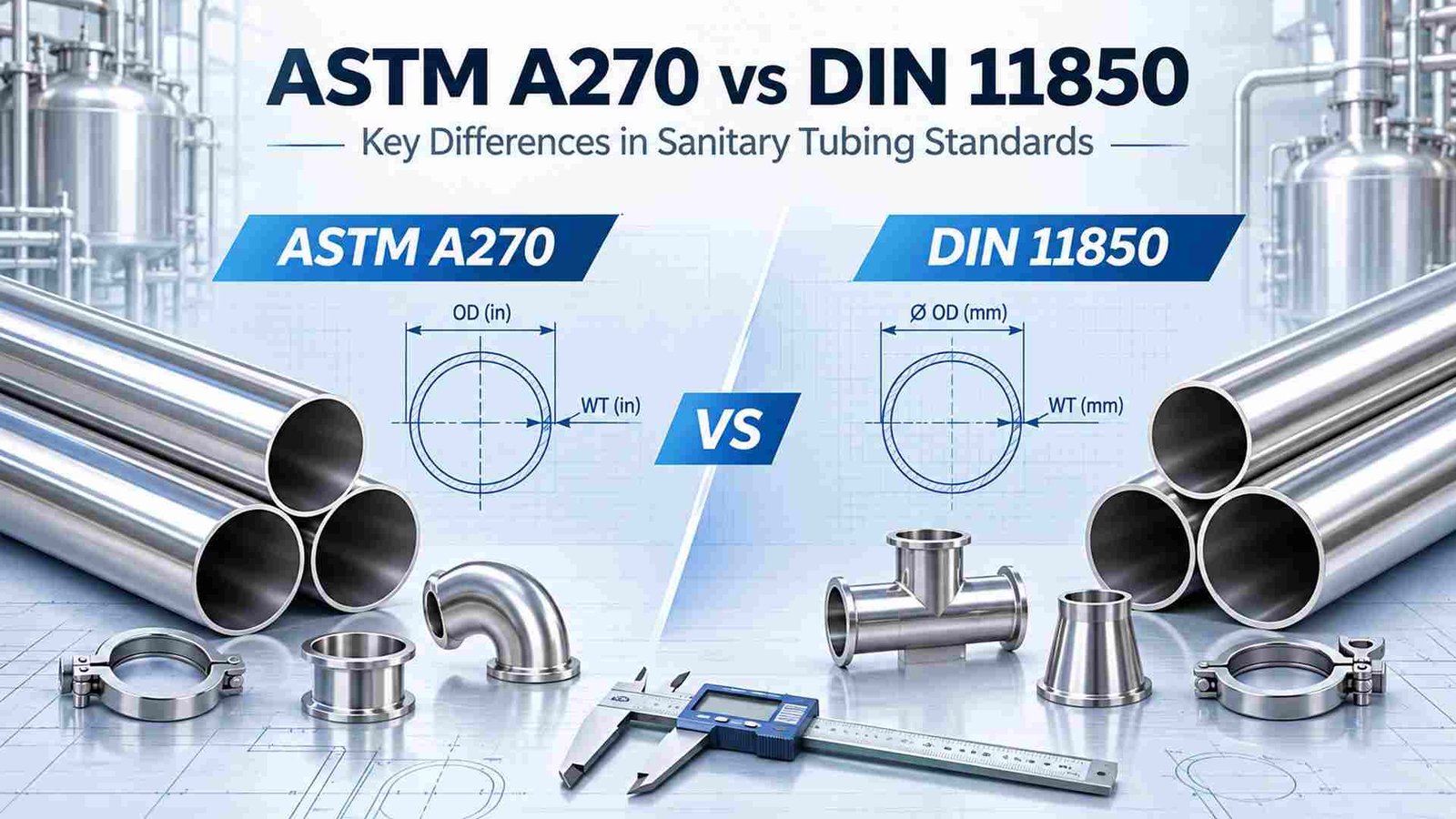
More comparison guide:ASTM A270 vs DIN 11850: Key Differences in Sanitary Tubing Standards
304L vs 316L Sanitary Tubing: Which Stainless Steel Grade Should You Choose?



[…] ASTM A270, ASME BPE, DIN 11850, DIN EN 10357, 3-A sanitary requirements, AS 1528.1 […]
[…] You may also want to learn: ASTM A270 Vs ASME BPE: Which Sanitary Tubing Standard Should You Specify? […]
[…] ASTM A270, ASME BPE, DIN 11850, EN 10357 and project-specific requirements […]
[…] More comparison guide:ASTM A270 Vs ASME BPE: Which Sanitary Tubing Standard Should You Specify? […]