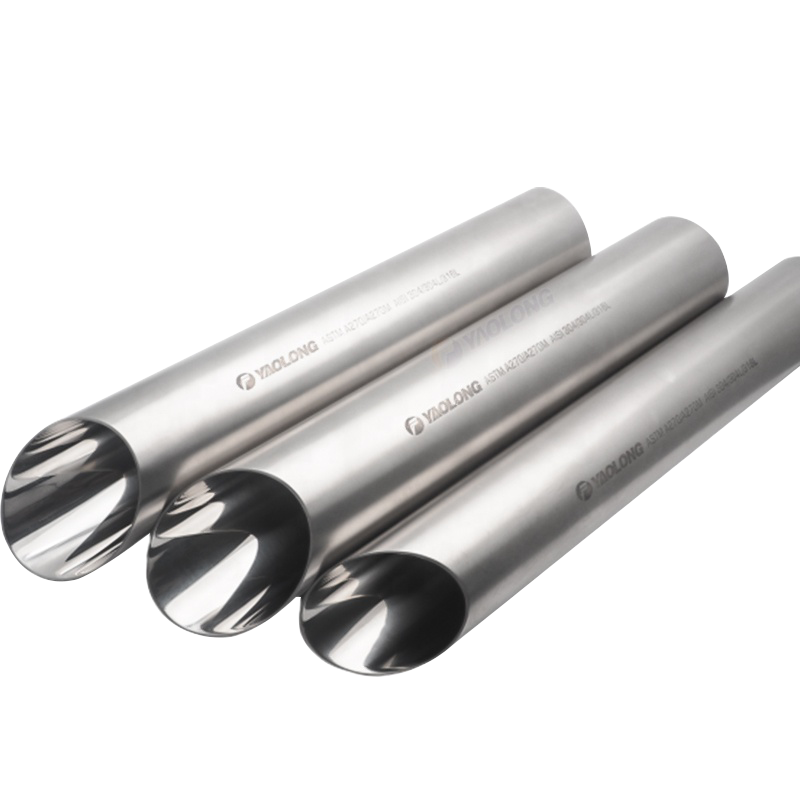
ASME BPE stainless steel sanitary tubing is engineered specifically for the stringent requirements of the bioprocessing, pharmaceutical, and high-purity biotechnology industries. Manufactured from premium 316L stainless steel with strictly controlled sulfur content, these tubes ensure maximum corrosion resistance and excellent weldability. Every tube undergoes rigorous mechanical polishing or electropolishing (EP) to achieve a flawless internal surface, minimizing the risk of bacterial entrapment and biofilm formation to protect your system's purity.
Compliant with the latest ASME BPE standards, our sanitary tubes feature an exceptionally smooth inner diameter (ID) surface roughness (Ra down to < 0.38 μm for electropolished finishes). To guarantee zero-defect performance in sterile process lines, all tubes are subject to 100% non-destructive eddy current testing, ultrasonic cleaning, and individual protective packaging in cleanroom conditions. Available in standard SF1 to SF4 surface designation finishes, they provide the reliable scalability needed for global sanitary fluid automation.
Standard | ASTM A270, 3-A, ASME BPE (Hygienic Standard) |
Material | TP304, TP304L, TP316, TP316L (Preferred for Pharmaceutical) |
Manufacturing | Welded (Automated TIG/Plasma), Seamless available on request |
OD Range (Inch) | 1/2" – 12" (Standardized Inch sizes) |
OD Tolerance | ±0.13 mm (for ≤1"); ±0.20 mm (for 1.5"-2"); ±0.25 mm (for 2.5"-3") |
Wall Thickness | 1.65 mm (0.065") as standard for 1" to 3" sizes |
WT Tolerance | ± 12.5% of nominal wall thickness (Per ASTM A270) |
Surface Finish | Mechanical Polish (MP), Electropolished (EP) available |
Ra Inner (Standard) | Ra ≤ 0.8 μm (32 Ra) or Ra ≤ 0.5 μm (20 Ra) |
Ra Inner (High-Purity) | Ra ≤ 0.38 - 0.4 μm (15 Ra) for Electropolished/BPE Class |
Testing | 100% Eddy Current Test, Reverse Flattening, Flaring, Hydrostatic |
End Finish | Square-cut & Deburred (Optimized for automatic orbital welding) |
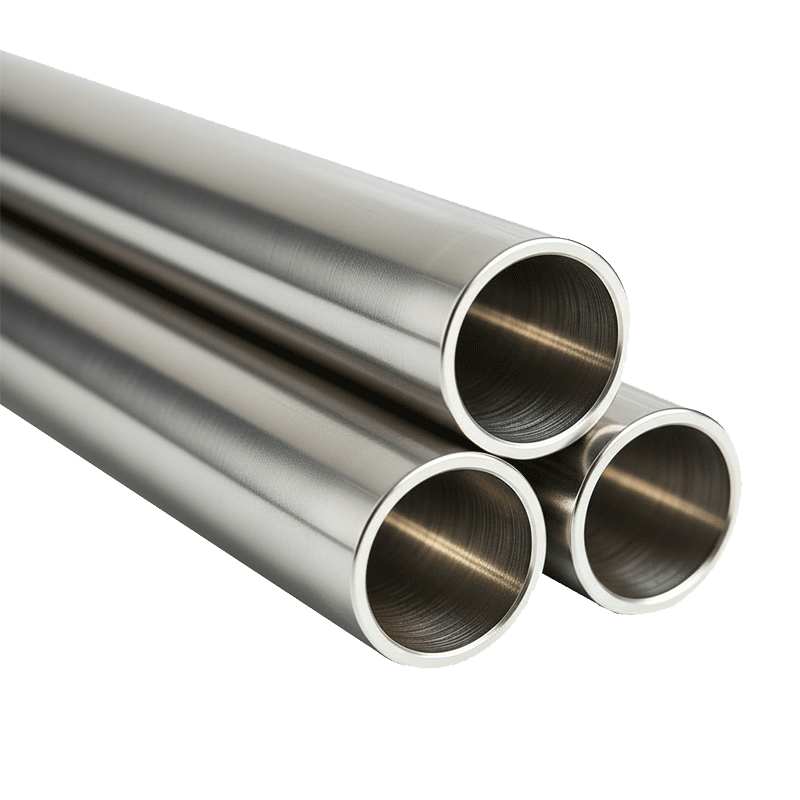
Utilizing high-purity TP304L and TP316L austenitic stainless steel, we precisely control the sulfur content (0.005%–0.017%) to optimize automated orbital welding performance. This critical adjustment ensures superior weld penetration consistency and enhances long-term corrosion resistance. Each batch is supplied with an EN 10204 3.1 Mill Test Certificate (MTC), providing full traceability from the initial melt to the final product.
Following the welding process, all tubing undergoes In-line Bright Annealing at temperatures exceeding 1040°C (1900°F) in a pure hydrogen atmosphere, followed by a rapid quench. This process eliminates residual welding stresses and fully restores the material's corrosion resistance, achieving a scale-free, bright, and ultra-clean finish on both internal and external surfaces without the need for chemical pickling.
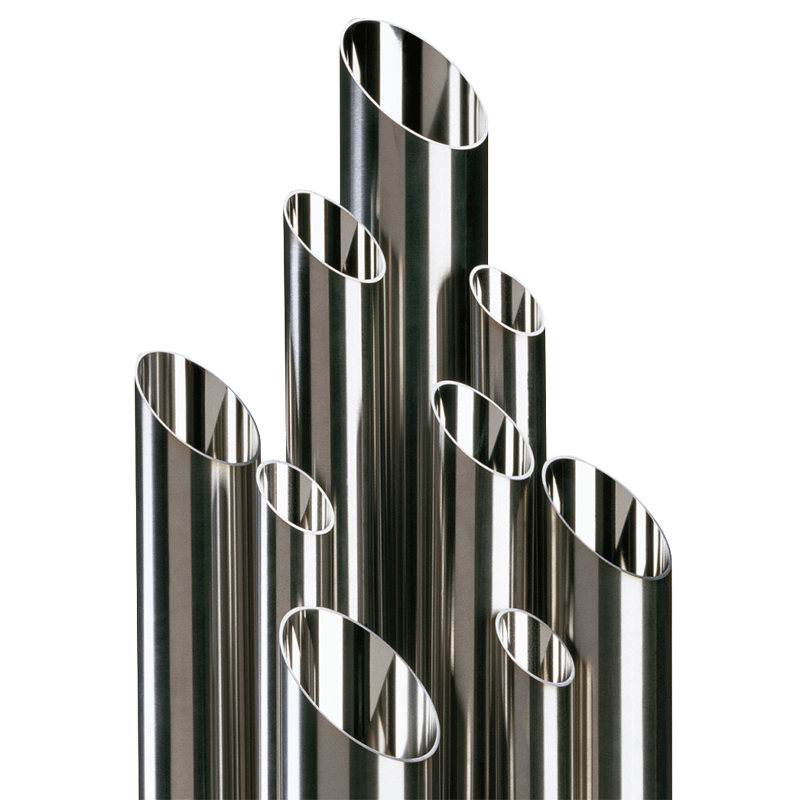
Adhering strictly to ASME B46.1 standards, we achieve an internal roughness of Ra ≤ 0.5 μm (20 μ-in) via multi-stage mechanical polishing. For high-purity applications, Electropolishing (EP) can further refine the surface to Ra ≤ 0.38 μm (15 μ-in). These mirror-like surfaces effectively inhibit bacterial growth and maximize the efficiency of CIP/SIP cleaning cycles.
We ensure absolute product reliability through a comprehensive system of Non-Destructive Testing (NDT) and Mechanical Testing. Each tube undergoes 100% Eddy Current Testing (ECT) and 100% Borescoping to identify invisible cracks or microscopic surface defects. Simultaneously, we perform rigorous Flattening, Flaring, and Reverse Bend tests to guarantee that the tubing maintains its structural integrity without cracking, even under extreme pressure fluctuations or severe physical processing.
Produced via automated TIG or Plasma welding with internal bead leveling, our tubes feature a smooth, crevice-free internal bore. Every tube undergoes a precise 90 degree square-cut and mechanical deburring process before leaving our facility. This high-precision end preparation ensures zero-gap alignment during field fit-up, significantly reducing welding difficulty and the risk of leakage.
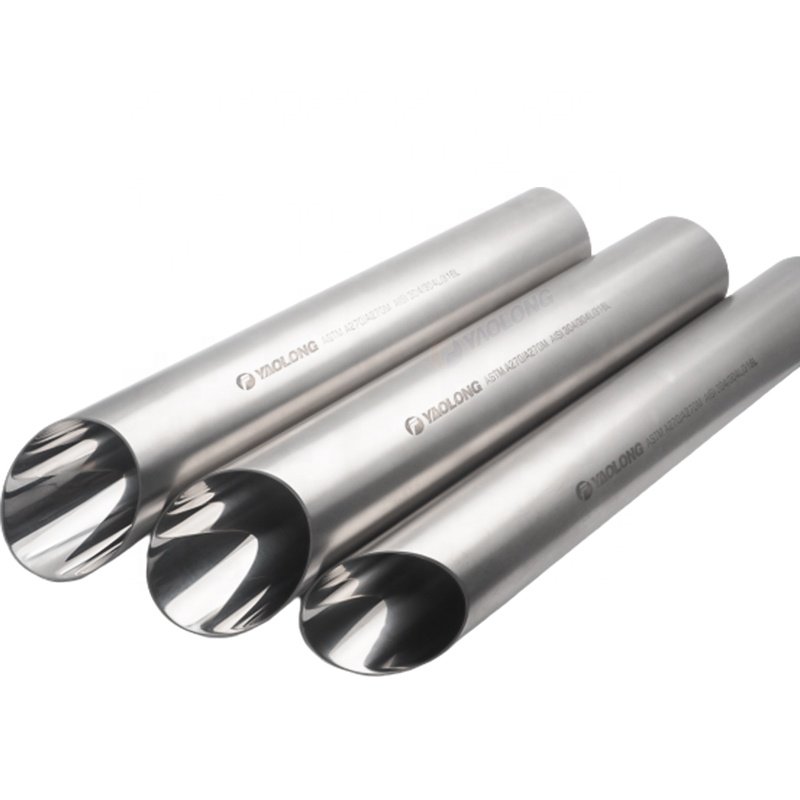
Each tube is precision-cleaned, dried, and fitted with protective end caps before being individually sealed in plastic sleeves to prevent scratches, dust, or moisture contamination. For export, we provide reinforced bundling and fumigated wooden crates. Permanent inkjet marking on each tube provides immediate identification of the heat number, material grade, and standards, ensuring a fully validated quality chain for your project.
| Material Comparison Table – ASTM A270 / 3-A Sanitary Tubing | |||||||||
| Material Grade | ASTM Ref. | C (max) | Cr (%) | Ni (%) | Mo (%) | S (%) | Yield Str. | Tensile Str. | Elongation |
| TP304 | AISI 304 | 0.08% | 18.0–20.0 | 8.0–11.0 | — | ≤ 0.030 | ≥ 205 MPa | ≥ 515 MPa | ≥ 35% |
| TP304L | AISI 304L | 0.04% | 18.0–20.0 | 8.0–12.0 | — | 0.005–0.017 | ≥ 170 MPa | ≥ 485 MPa | ≥ 35% |
| TP316L | AISI 316L | 0.04% | 16.0–18.0 | 10.0–14.0 | 2.0–3.0 | 0.005–0.017 | ≥ 170 MPa | ≥ 485 MPa | ≥ 35% |
3-A / ASTM A270 Stainless Steel Tubing Dimensions & Tolerances | ||||||
| The data in this table strictly complies with ASTM A270 specifications and is suitable for 3-A certified sanitary processing systems. | ||||||
| Size OD (in) | Nominal OD (mm) | Wall Thickness (in) | Wall Thickness (mm) | OD Tolerance (mm) | WT Tolerance | Finish ID (Ra) |
| 1/2" | 12.7 | 0.065" | 1.65 | ± 0.13 | ± 10% | ≤ 0.81 μm (32 μ-in) |
| 3/4" | 19.05 | 0.065" | 1.65 | ± 0.13 | ± 10% | ≤ 0.81 μm (32 μ-in) |
| 1" | 25.4 | 0.065" | 1.65 | ± 0.13 | ± 10% | ≤ 0.51 μm (20 μ-in) |
| 1-1/2" | 38.1 | 0.065" | 1.65 | ± 0.20 | ± 10% | ≤ 0.51 μm (20 μ-in) |
| 2" | 50.8 | 0.065" | 1.65 | ± 0.20 | ± 10% | ≤ 0.51 μm (20 μ-in) |
| 2-1/2" | 63.5 | 0.065" | 1.65 | ± 0.25 | ± 10% | ≤ 0.51 μm (20 μ-in) |
| 3" | 76.2 | 0.065" | 1.65 | ± 0.25 | ± 10% | ≤ 0.51 μm (20 μ-in) |
| 4" | 101.6 | 0.083" | 2.11 | ± 0.38 | ± 10% | ≤ 0.51 μm (20 μ-in) |
| 6" | 152.4 | 0.109" | 2.77 | ± 0.76 | ± 10% | ≤ 0.81 μm (32 μ-in) |
In 3-A and ASME BPE systems, sulfur content is strictly controlled between 0.005% and 0.017%. This range is critical for optimizing automated orbital welding performance. Sulfur content below 0.005% can cause inconsistent weld penetration and arc wandering, while content above 0.017% increases the risk of hot cracking. Precise sulfur control ensures uniform, high-quality weld beads, which are essential for crevice-free hygienic systems.
Mechanical Polishing (MP) uses physical abrasives to reduce surface roughness, typically achieving Ra ≤ 0.5 μm (20 μ-in) for standard 3-A tubes. Electropolishing (EP) is an electrochemical process that removes microscopic peaks from the surface. EP not only achieves a superior finish of Ra ≤ 0.38 μm (15 μ-in) but also creates a chromium-rich passive layer that significantly enhances corrosion resistance and cleanability, making it the standard for high-purity pharmaceutical applications.
TP304L is a cost-effective choice suitable for standard food, dairy, and beverage applications with moderate corrosion risks. TP316L contains over 2.0% Molybdenum (Mo), providing much higher resistance to pitting and chloride-induced corrosion. TP316L is highly recommended for processes involving high salt content, acidic media, or aggressive CIP (Clean-in-Place) chemicals. It is the mandatory standard for most biopharmaceutical facilities.
No. 3-A tubing follows the Imperial (Inch) system (e.g., 1" = 25.4mm), whereas European DIN (e.g., DN25 = 29mm) or ISO standards have completely different outside diameters. Attempting to weld them together will result in severe internal misalignment and "dead legs," which will fail any hygienic audit. It is vital to ensure that the entire piping system, including tubes, valves, and fittings, follows the same dimensional standard.
Bright Annealing is an in-line solution treatment performed in a pure hydrogen atmosphere. It eliminates residual welding stresses and fully restores the material’s corrosion resistance without forming oxidation scales. For 3-A tubing, the BA process ensures excellent ductility for flaring or bending while maintaining a scale-free, bright, and ultra-clean internal surface, avoiding the potential contamination risks associated with traditional acid pickling.