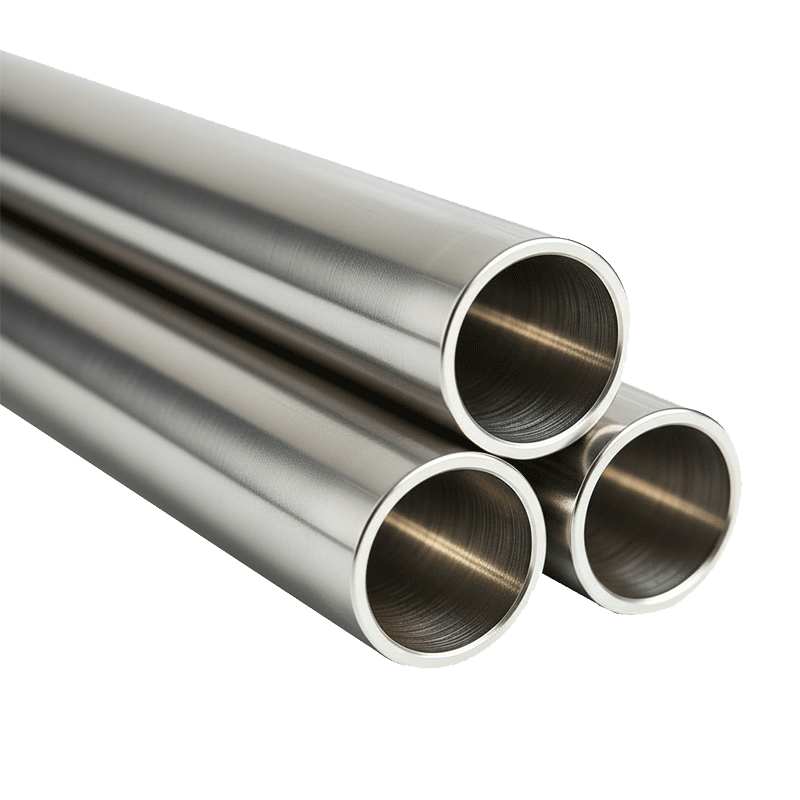
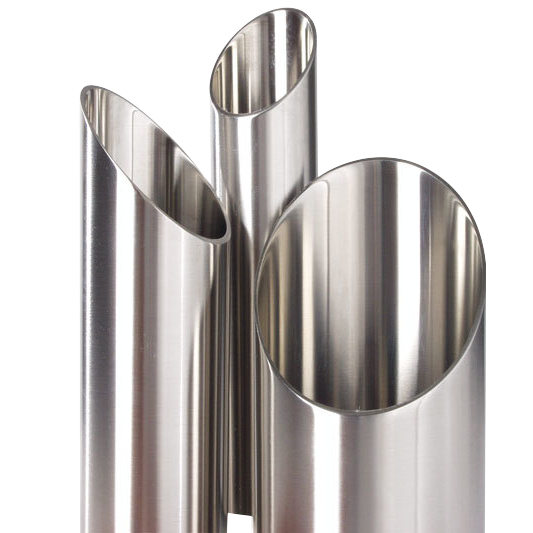
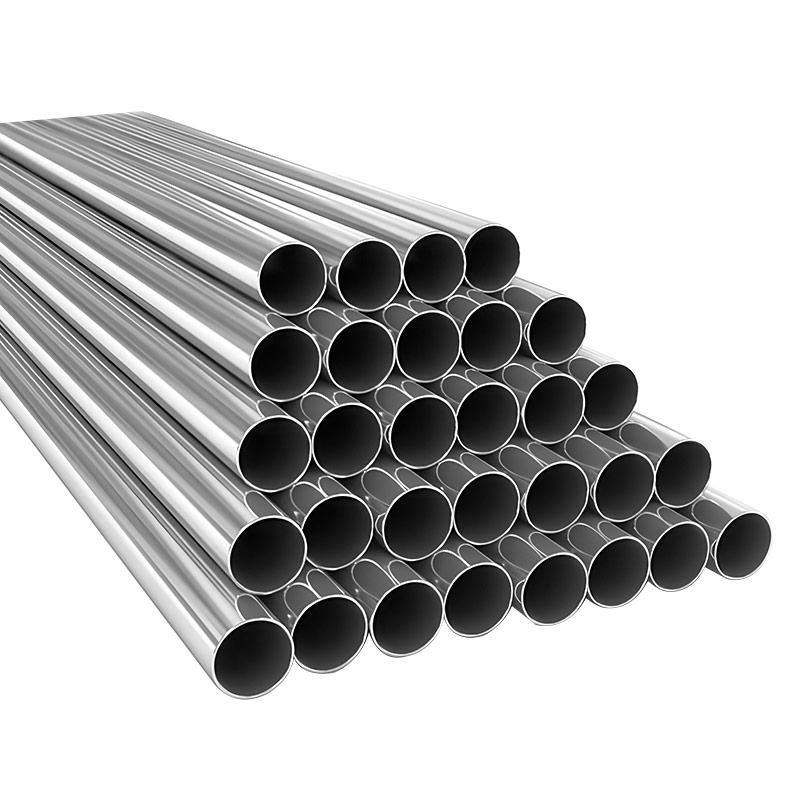
EN 10357 stainless steel sanitary tubing is one of the main European standards for hygienic welded stainless steel tube, used to build cleanable and sterilisable piping systems. It is based on austenitic stainless steels according to EN 10088 2, most commonly 1.4301 (304) and 1.4404 (316L), covering both general food and beverage service and more corrosive cleaning conditions. The Series A dimensional range spans DN10 to DN300, with standardized outside diameter and wall thickness combinations and typical wall thickness tolerance around ±10%. Internal surfaces can be pickled, mechanically polished or electropolished, with roughness values typically Ra ≤ 0.8 μm, helping to reduce product residue and improve cleanability, making EN 10357 a solid basis for stainless steel sanitary tube selection.
EN 10357 stainless steel sanitary pipe is widely used in pharmaceutical and biotech, dairy processing, brewery and beverage, food production, personal care and fine chemicals. These industries demand high levels of hygiene and microbial control and often rely on frequent CIP/SIP cleaning and sterilization. Thanks to its standardized dimensions, smooth internal surfaces and good compatibility with EN / DIN sanitary fittings and valves, EN 10357 sanitary tubing helps minimize product hold up and biofilm formation, simplifies engineering design and maintenance, and is a common choice for modern hygienic piping systems.
Standard | EN 10357 (Formerly DIN 11850), Series A (Preferred) / B / C / D |
Material | 1.4301 (304), 1.4307 (304L), 1.4404 (316L) |
Manufacturing | Welded |
OD Range (DN) | DN10 – DN300 (Standardized Series A diameters) |
OD Range (mm) | 13 mm – 304 mm (Compliant with EN 10357 Series A dimensions) |
OD Tolerance | DN10-DN20: ±0.10mm; DN25-DN100: ±1.0% of OD; DN125-DN300: ±0.40mm |
Wall Thickness | 1.0 mm (Series B), 1.5 mm (Series A <DN50), 2.0 mm (Series A ≥DN50) |
WT Tolerance | ± 10% of nominal wall thickness |
Surface Finish | CC (Pickled), BC (Inner Pickled/Outer Polished), BD (Inner/Outer Polished) |
Ra Inner (Weld) | Ra ≤ 0.8 μm (Base material), Ra ≤ 1.6 μm (Weld seam area) |
Ra Inner (High-Purity) | Optional Ra ≤ 0.4 μm – 0.6 μm (Electropolished/Hygienic class) |
Testing | 100% Eddy Current Test or Hydrostatic Test, Intergranular Corrosion Test |
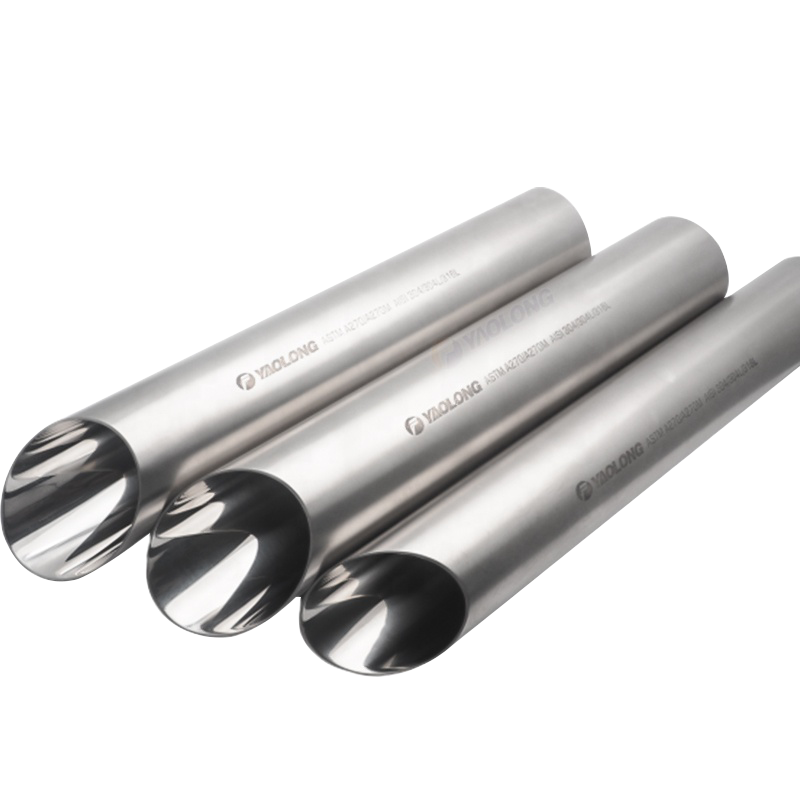
EN 10357 stainless steel sanitary tubing is produced from 1.4301 (304) and 1.4404 (316L) coils with full heat number traceability and EN 10088 2 compliance. Forming, welding and solution annealing follow controlled procedures to ensure consistent outside diameter, wall thickness and weld quality. Dimensional tolerances and surface condition are regularly monitored so that the sanitary tube meets EN hygienic piping requirements.
Each batch of EN 10357 sanitary tubing undergoes dimensional and visual inspection, including checks on OD, wall thickness, straightness and weld appearance. According to project requirements, additional hydrostatic tests and/or eddy current tests can be performed to verify weld integrity and confirm leak tight performance in service. Mill test certificates (MTC) and test reports can be provided for documentation and validation.
The inner surface of EN 10357 sanitary tube is treated by pickling and passivation and/or mechanical polishing, with electropolishing available for higher purity applications. Typical internal roughness is Ra ≤ 0.8 μm, and lower values (e.g. Ra ≤ 0.6 μm) can be supplied as required. Smooth internal surfaces with well blended weld seams help reduce product hold up and make CIP/SIP cleaning and sterilization more effective.
With standardized OD and wall thickness combinations (especially in Series A), EN 10357 sanitary tubing fits EN/DIN type hygienic fittings, unions and valves with minimal adaptation. This dimensional compatibility simplifies piping design, supports orbital welding and reduces the need for special transition pieces in European style hygienic piping systems.
Each sanitary tube is protected with plastic end caps and wrapped in plastic film to prevent dust, moisture and mechanical damage. Tubes are bundled and secured with straps, and can be packed in wooden cases or on wooden pallets for safe sea and land transport. Bundles are clearly labeled with size, material grade, EN 10357 series and heat number to ensure easy identification and full traceability.
| EN 10357 Material Composition & Mechanical Properties | ||||||||
| Mat. No. | AISI Ref. | C (max) | Cr (%) | Ni (%) | Mo (%) | Yield Strength (Rp0.2) | Tensile Strength (Rm) | Elongation (A) |
| 1.4301 | 304 | 0.07% | 17.5–19.5 | 8.0–10.5 | – | ≥ 190 MPa | 500–700 MPa | ≥ 45% |
| 1.4307 | 304L | 0.03% | 17.5–19.5 | 8.0–10.5 | – | ≥ 175 MPa | 500–700 MPa | ≥ 45% |
| 1.4404 | 316L | 0.03% | 16.5–18.5 | 10.0–13.0 | 2.0–2.5 | ≥ 200 MPa | 500–700 MPa | ≥ 40% |
| EN 10357 Series A – Dimensional Specifications & Tolerances | |||||
| EN 10357 Series B / C / D available on request; detailed dimensional tables can be provided in separate datasheets. | |||||
| DN | OD (mm) | OD Tolerance (mm) | WT (mm) | WT Tolerance | Finish ID (Ra) |
| DN 10 | 13 | ± 0.10 | 1.5 | ± 10% | ≤ 0.8 μm |
| DN 15 | 19 | ± 0.10 | 1.5 | ± 10% | ≤ 0.8 μm |
| DN 20 | 23 | ± 0.10 | 1.5 | ± 10% | ≤ 0.8 μm |
| DN 25 | 29 | ± 0.10 | 1.5 | ± 10% | ≤ 0.8 μm |
| DN 32 | 35 | ± 0.10 | 1.5 | ± 10% | ≤ 0.8 μm |
| DN 40 | 41 | ± 0.10 | 1.5 | ± 10% | ≤ 0.8 μm |
| DN 50 | 53 | ± 0.10 | 1.5 | ± 10% | ≤ 0.8 μm |
| DN 65 | 70 | ± 0.10 | 2 | ± 10% | ≤ 0.8 μm |
| DN 80 | 85 | ± 0.10 | 2 | ± 10% | ≤ 0.8 μm |
| DN 100 | 104 | ± 0.10 | 2 | ± 10% | ≤ 0.8 μm |
| DN 125 | 129 | ± 0.15 | 2 | ± 10% | ≤ 0.8 μm |
| DN 150 | 154 | ± 0.15 | 2 | ± 10% | ≤ 0.8 μm |
| DN 200 | 204 | ± 0.15 | 2 | ± 10% | ≤ 0.8 μm |
| DN 250 | 254 | ± 0.40 | 2 | ± 10% | ≤ 0.8 μm |
| DN 300 | 304 | ± 0.40 | 2 | ± 10% | ≤ 0.8 μm |
Series A is the "universal standard" for the European food, beverage, and dairy industries. Its main advantage is the availability of matching fittings; most hygienic elbows, tees (DIN 11852), and unions (DIN 11851) are designed based on Series A dimensions.
DIN 11850 is the older German standard for hygienic tube, while EN 10357 is the updated European standard that continues and harmonises its dimensional concept. The most commonly used EN 10357 Series A is broadly compatible with DIN 11850 Series 2, but EN 10357 also clarifies material references (EN 10088 2), welding quality and surface finish requirements for modern sanitary piping.
The most common grades are:
EN 10357 sanitary tube can be supplied pickled and passivated, mechanically polished and, if needed, electropolished. Typical internal roughness for hygienic service is Ra ≤ 0.8 μm, and lower Ra values (e.g. Ra ≤ 0.6 μm) can be provided for high purity or more demanding applications. Smooth internal surfaces and well blended weld seams help reduce product hold up and support effective CIP/SIP cleaning and sterilisation.
For standard conditions and mild cleaning media, 1.4301 (304) or 1.4307 (304L) EN 10357 sanitary tubing is usually sufficient and more economical. When the system involves chloride containing media, strong CIP chemicals or more critical hygienic conditions, 1.4404 (316L) is recommended because of its higher corrosion resistance and better long term reliability in sanitary piping systems.