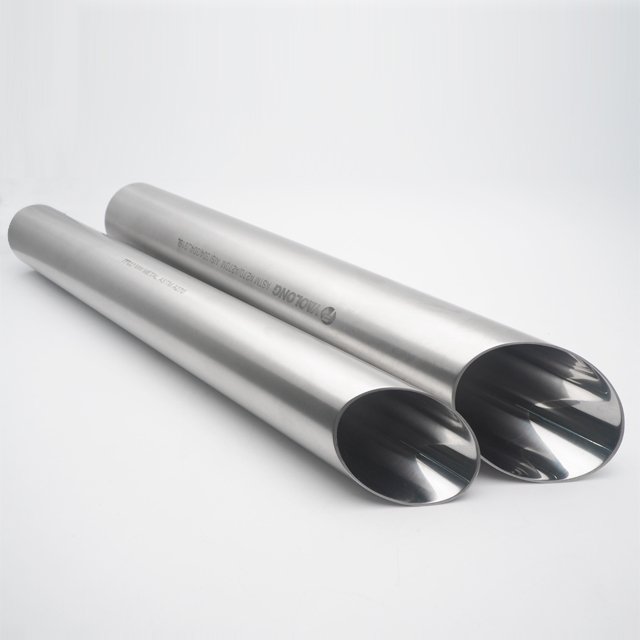
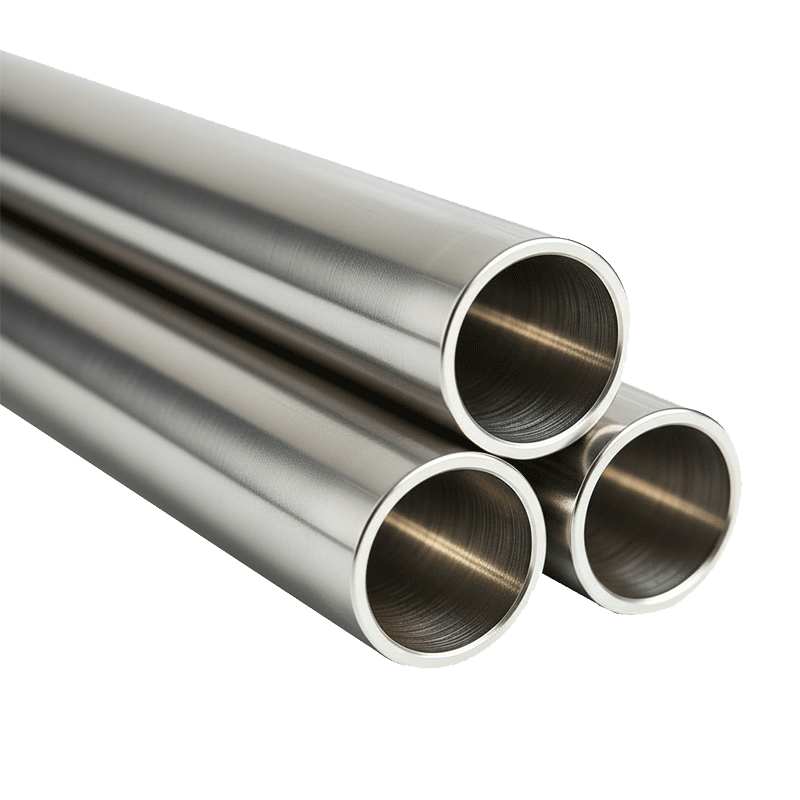
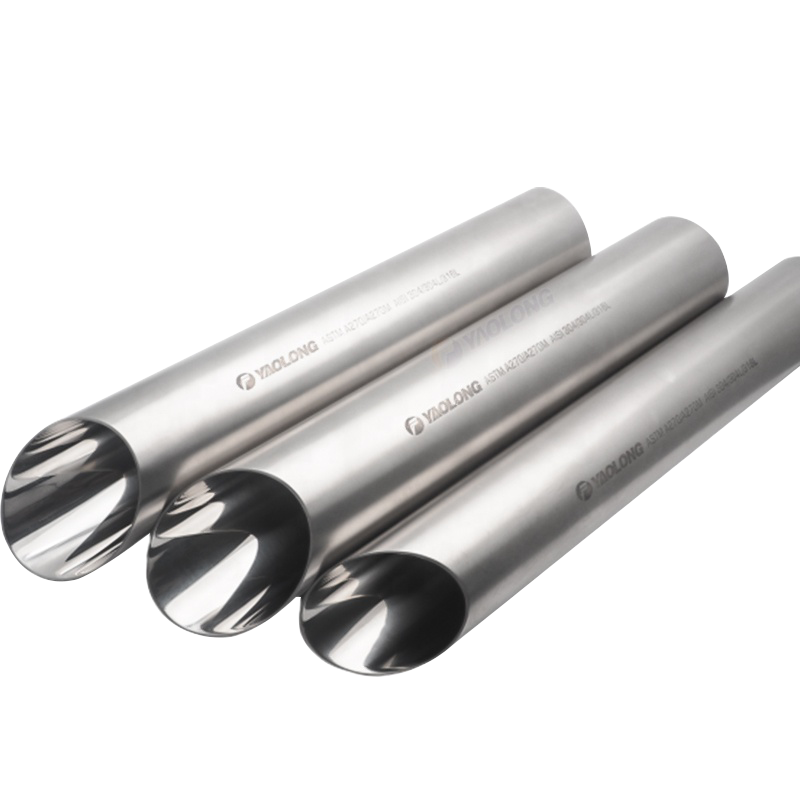
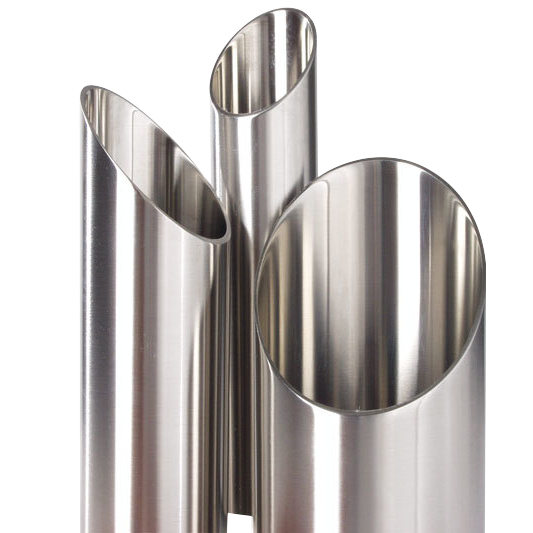
DIN 11850 stainless steel sanitary tubing/sanitary tube is widely used in hygienic process piping systems in the food, beverage, dairy, brewery and pharmaceutical industries, especially in regions following European standards. It is designed for clean and corrosion-resistant transfer of products and cleaning media, and matches DIN-type sanitary fittings and valves for reliable hygienic piping systems.
In recent years, the dimensional concept of DIN 11850 has been continued and updated in DIN EN 10357, so many projects now refer to DIN 11850 and EN 10357 as compatible European hygienic tube series.
Our DIN 11850 stainless steel sanitary tubing / sanitary tube is manufactured from 304 and 316L stainless steel, in both welded and seamless versions. Inner surfaces are polished with controlled roughness, typically Ra ≤ 0.8 μm, with optional Ra ≤ 0.6 μm for higher-purity applications. Precise OD and wall thickness tolerances ensure good fit with DIN/EN sanitary fittings, clamps and valves in modern process lines.
Standard | DIN 11850 / DIN EN 10357 |
Material | 304 / 304L / 316 / 316L stainless steel |
Surface Finish | 2B, BA, mechanically polished (MP), electropolished (EP) |
Manufacturing | Welded / Seamless |
OD Size | 1/2" – 12" / 12.7 mm – 304.8 mm |
Wall Thickness | Typical 1.0 – 3.0 mm (e.g. 1.0 / 1.2 / 1.5 / 2.0 / 2.5 / 3.0 mm), other thicknesses available on request |
Polishing Grade | 180 grit / 240 grit / 320 grit / BA |
Ra Value (Inner) | Typical inner surface roughness Ra ≤ 0.8 μm, optional Ra ≤ 0.6 μm for high-purity applications |
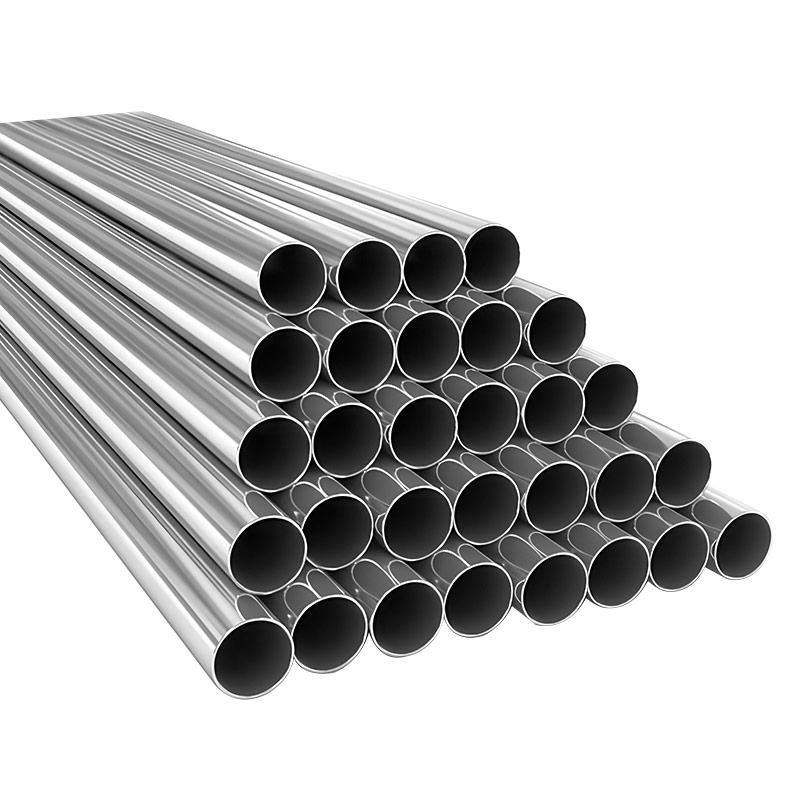
DIN 11850 stainless steel sanitary tube is produced from selected 304/316L stainless steel with full heat number traceability. Raw material inspection, forming, welding, solution annealing and polishing are all controlled to stable procedures. Dimensional tolerances and surface quality follow the typical DIN 11850 / EN 10357 tube series, ensuring reliable fit with DIN/EN sanitary fittings and valves.
Each batch of DIN 11850 sanitary tube is subject to dimensional and visual inspection, as well as checks on inner surface finish and weld appearance. According to customer requirements, hydrostatic testing and/or eddy-current testing can be carried out to verify weld integrity and ensure leak-free performance in service. Test reports and MTCs can be supplied for project documentation.
Tubes are supplied with hygienic internal and external finishes such as 2B, BA, 180 grit, 240 grit, 320 grit, and optional mechanically polished (MP) or electropolished (EP) surfaces. The internal roughness is typically controlled to Ra ≤ 0.8 μm, with Ra ≤ 0.6 μm available for higher-purity or more demanding hygienic applications.
DIN 11850 sanitary tubing is solution annealed after forming and welding to restore corrosion resistance and ductility. For higher cleanliness, bright annealed (BA) tubing can be offered, providing a cleaner and smoother inner surface that further improves cleanability and reduces the risk of contamination.
DIN 11850 stainless steel sanitary tube is commonly used in European-style food, beverage, dairy and brewery plants, and in hygienic utility lines in pharmaceutical facilities that prefer DIN/EN dimensions. Combined with DIN/EN sanitary fittings, unions and valves, it forms complete hygienic piping systems compatible with CIP/SIP regimes.
Each tube is protected with plastic end caps and wrapped in plastic film to prevent dust, moisture and mechanical damage. Tubes are bundled and further protected with woven bags or packed in wooden cases/pallets for sea and land transport. Clear labels indicating size, grade, standard and heat number are applied to each bundle for easy identification and traceability.
| Material Chemical Composition & Mechanical Properties | |||||||||
| Comparing the two most common stainless steel grades used for DIN 11850 pipes. | |||||||||
| Grade Name | Mat. No. | AISI Ref. | C (max) | Cr | Ni | Mo | Yield Strength (Rp0.2) | Tensile Strength (Rm) | Elongation (A) |
| X5CrNi18-10 | 1.4301 | 304 | 0.07% | 17.5–19.5% | 8.0–10.5% | – | ≥ 190 MPa | 500–700 MPa | ≥ 45% |
| X2CrNiMo17-12-2 | 1.4404 | 316L | 0.03% | 16.5–18.5% | 10.0–13.0% | 2.0–2.5% | ≥ 200 MPa | 500–700 MPa | ≥ 40% |
| DIN 11850 Series 2 Dimensional Specifications & Tolerances | |||||
| This is the most widely used series in the food, dairy, and chemical industries (equivalent to EN 10357 Series A). | |||||
| DN | Outside Diameter (OD) | OD Tolerance | Wall Thickness (WT) | WT Tolerance | Finish ID (Ra) |
| DN 10 | 13 mm | ± 0.10 mm | 1.5 mm | ± 0.15 mm | ≤ 0.8 μm |
| DN 15 | 19 mm | ± 0.10 mm | 1.5 mm | ± 0.15 mm | ≤ 0.8 μm |
| DN 20 | 23 mm | ± 0.10 mm | 1.5 mm | ± 0.15 mm | ≤ 0.8 μm |
| DN 25 | 29 mm | ± 0.10 mm | 1.5 mm | ± 0.15 mm | ≤ 0.8 μm |
| DN 32 | 35 mm | ± 0.10 mm | 1.5 mm | ± 0.15 mm | ≤ 0.8 μm |
| DN 40 | 41 mm | ± 0.10 mm | 1.5 mm | ± 0.15 mm | ≤ 0.8 μm |
| DN 50 | 53 mm | ± 0.10 mm | 1.5 mm | ± 0.15 mm | ≤ 0.8 μm |
| DN 65 | 70 mm | ± 0.10 mm | 2.0 mm | ± 0.20 mm | ≤ 0.8 μm |
| DN 80 | 85 mm | ± 0.10 mm | 2.0 mm | ± 0.20 mm | ≤ 0.8 μm |
| DN 100 | 104 mm | ± 0.10 mm | 2.0 mm | ± 0.20 mm | ≤ 0.8 μm |
| DN 125 | 129 mm | ± 0.15 mm | 2.0 mm | ± 0.20 mm | ≤ 0.8 μm |
| DN 150 | 154 mm | ± 0.15 mm | 2.0 mm | ± 0.20 mm | ≤ 0.8 μm |
| DN 200 | 204 mm | ± 0.15 mm | 2.0 mm | ± 0.20 mm | ≤ 0.8 μm |
| DN 250 | 254 mm | ± 0.40 mm | 2.0 mm | ± 0.20 mm | ≤ 0.8 μm |
| DN 300 | 304 mm | ± 0.40 mm | 2.0 mm | ± 0.20 mm | ≤ 0.8 μm |
| DIN 11850 Series 1 (Light Series) | |||||
| Commonly used for lightweight systems where wall thickness is consistently 1.0 mm. | |||||
| DN | Outside Diameter (OD) | OD Tolerance | Wall Thickness (WT) | WT Tolerance | Finish ID (Ra) |
| DN 10 | 12 mm | ± 0.12 mm | 1.0 mm | ± 0.10 mm | ≤ 0.8 μm |
| DN 15 | 18 mm | ± 0.12 mm | 1.0 mm | ± 0.10 mm | ≤ 0.8 μm |
| DN 20 | 22 mm | ± 0.12 mm | 1.0 mm | ± 0.10 mm | ≤ 0.8 μm |
| DN 25 | 28 mm | ± 0.15 mm | 1.0 mm | ± 0.10 mm | ≤ 0.8 μm |
| DN 32 | 34 mm | ± 0.15 mm | 1.0 mm | ± 0.10 mm | ≤ 0.8 μm |
| DN 40 | 40 mm | ± 0.20 mm | 1.0 mm | ± 0.10 mm | ≤ 0.8 μm |
| DN 50 | 52 mm | ± 0.20 mm | 1.0 mm | ± 0.10 mm | ≤ 0.8 μm |
DIN 11850 stainless steel sanitary tubing is mainly used in hygienic process piping for food, beverage, dairy, brewery and chemical industries, especially in plants following European standards. It provides defined OD and wall thickness for easy matching with DIN/EN sanitary fittings, unions and valves in hygienic piping systems.
Series 1 (Light Series) uses a constant 1.0 mm wall thickness, mainly for lightweight, low-pressure hygienic systems.
Series 2 has thicker walls (typically 1.5–2.0 mm and above), offering higher mechanical strength and is the most widely used series in food, dairy and chemical applications. Series 2 is also commonly associated with EN 10357 Series A dimensions.
DIN 11850 is the traditional German standard for hygienic stainless steel tubing. Its dimensional concept has been continued and updated in EN 10357, so DIN 11850 (especially Series 2) and EN 10357 Series A are often treated as equivalent or compatible in many projects. Our tubing can be supplied according to DIN 11850 and EN 10357 requirements on request.
The most common grades are X5CrNi18-10 (1.4301 / AISI 304) and X2CrNiMo17-12-2 (1.4404 / AISI 316L).
DIN 11850 hygienic tubing can be supplied with 2B, BA, mechanically polished (MP) or electropolished (EP) finishes. Inner surface roughness is typically Ra ≤ 0.8 μm as standard, with Ra ≤ 0.6 μm available for higher purity applications. These finishes help reduce product residue, improve cleanability and support CIP/SIP cleaning in hygienic piping systems.