When you're dealing with sanitary and high-purity stainless steel tubing, surface finish isn't just a minor detail; it plays an essential role in cleanability, corrosion resistance, contamination risk, appearance, and cost. The surface finish impacts how easily contaminants can be removed, influencing hygiene standards in critical applications. You'll encounter three primary methods: Mechanical Polishing (MP), Electropolishing (EP), and a combination of both (MP + EP). Each method offers distinct advantages based on your specific requirements. The "best" option hinges on various factors, including the desired surface roughness, hygiene level, cleaning techniques, and expected corrosion exposure. Understanding these variables guarantees you make informed decisions tailored to your project's specifications and operational needs. Additionally, high-purity TP304L and TP316L stainless steel are often preferred for pharmaceutical applications due to their optimized welding performance and surface finishes.
A quick comparison of electropolished and mechanically polished stainless steel tubing reveals key differences that can greatly impact your project's success. Mechanically polished tubing utilizes mechanical abrasion to enhance appearance and reduce roughness, while electropolished tubing employs electrochemical material removal for superior surface smoothness and corrosion resistance.
Electropolished surfaces are typically brighter and more reflective, offering improved cleanability and a higher level of corrosion resistance compared to mechanically polished options. If you need controlled roughness with exceptional surface quality, the combination of both processes (MP + EP) provides a refined, chromium-enriched finish. Ultimately, your choice should align with your application requirements, whether it’s for food and beverage or high-purity pharmaceutical systems. Additionally, high-precision fabrication is essential for achieving the stringent global hygiene requirements associated with critical fluid systems.
| Factor | Mechanically Polished (MP) | Electropolished (EP) | MP + EP |
|---|---|---|---|
| Process Type | Mechanical abrasion | Electrochemical material removal | Mechanical finishing followed by electropolishing |
| Main Purpose | Reduce roughness and improve appearance | Improve surface smoothness, cleanliness, and corrosion resistance | Achieve controlled roughness plus high surface quality |
Mechanical polishing of stainless steel tubing is a physical material-removal process that employs abrasive belts, wheels, or compounds to smooth the surface. The goal is to reduce surface irregularities and achieve a specific finish or roughness, enhancing both appearance and performance. Understanding how this process works and the typical finishes it produces is essential for selecting the right treatment for your tubing needs.
Through a series of progressive abrasive finishing techniques, mechanical polishing of stainless steel tubing involves multiple stages of grinding and polishing. You start with coarser grits to remove deeper surface defects, ensuring a solid foundation for finer polishing. As you progress, you’ll switch to increasingly finer grit to refine the surface, achieving the desired smoothness. This process can be applied to both outer diameter (OD) and inner diameter (ID) surfaces, depending on your application needs. Consistent processing is essential; any inconsistency can lead to uneven surfaces and compromised quality. Ultimately, deeper defects must be mechanically removed before you can produce a fine sanitary surface, ensuring the tubing meets stringent industry standards. This method is crucial for achieving Ra 0.8 µm surface finish that meets the requirements for hygienic applications.
When it comes to mechanical polishing of stainless steel tubing, various finishes are commonly specified, each reflecting the desired surface quality. Grit-based finishes, such as 240 or 320 grit, provide a general idea of surface roughness but lack precision. Instead, specifying a maximum Ra (Roughness Average) value offers a clearer standard for surface quality. You might also encounter specifications for inner diameter (ID) polish, outer diameter (OD) polish, or both (ID + OD) polish, depending on your application. This level of detail guarantees you achieve the exact finish needed for performance and aesthetic considerations. By focusing on Ra values rather than grit numbers, you gain more control over the final surface characteristics of your stainless steel tubing. Additionally, the choice between mechanical polish (MP) and electropolish (EP) can significantly impact the corrosion resistance and hygiene of the tubing.
Electropolishing is an electrochemical process that treats stainless steel tubing by removing a controlled microscopic layer from its surface. In this process, the tubing acts as the anode in an electrolyte solution, allowing for the more rapid removal of high points compared to lower areas. This results in a smoother, more refined surface at the microscopic level, enhancing both aesthetics and functionality.
While the process may seem complex at first glance, electropolishing stainless steel tubing is a straightforward electrochemical method designed to enhance the material's surface quality. It begins with preparation and cleaning to remove contaminants. The tubing is then submerged in an electrolyte bath, where an electrical current is applied. This current facilitates controlled surface dissolution, effectively removing microscopic imperfections and improving the overall finish. After a specified duration, the tubing is rinsed and neutralized to halt the process and prevent further reaction. Finally, a thorough cleaning is performed to eliminate any residual chemicals. The result is a smooth, shiny surface that enhances corrosion resistance and improves hygiene, making it ideal for various applications. This process is critical for ensuring compliance with GMP and FDA regulations, which guarantees a sterile production environment.
The microscopic transformations that occur during electropolishing greatly enhance the surface quality of stainless steel tubing. Key changes include the preferential removal of surface peaks, leading to a smoother microscopic profile. This process effectively reduces microscopic irregularities and removes embedded contaminants, which can compromise the material's integrity. Additionally, there's a significant reduction of free iron, which can cause corrosion. The result is enhanced passive surface characteristics that improve resistance to environmental factors. Furthermore, the improved surface finish achieved through electropolishing is particularly beneficial for hygienic applications in industries such as food and pharmaceuticals.
| Change | Effect | Benefit |
|---|---|---|
| Surface Peaks Removal | Smoother profile | Enhanced aesthetics |
| Microscopic Irregularities | Uniform surface | Reduced friction |
| Embedded Contaminants | Cleaner tubing | Improved purity |
| Free Iron Reduction | Corrosion resistance | Increased lifespan |
| Passive Characteristics | Enhanced durability | Better performance |
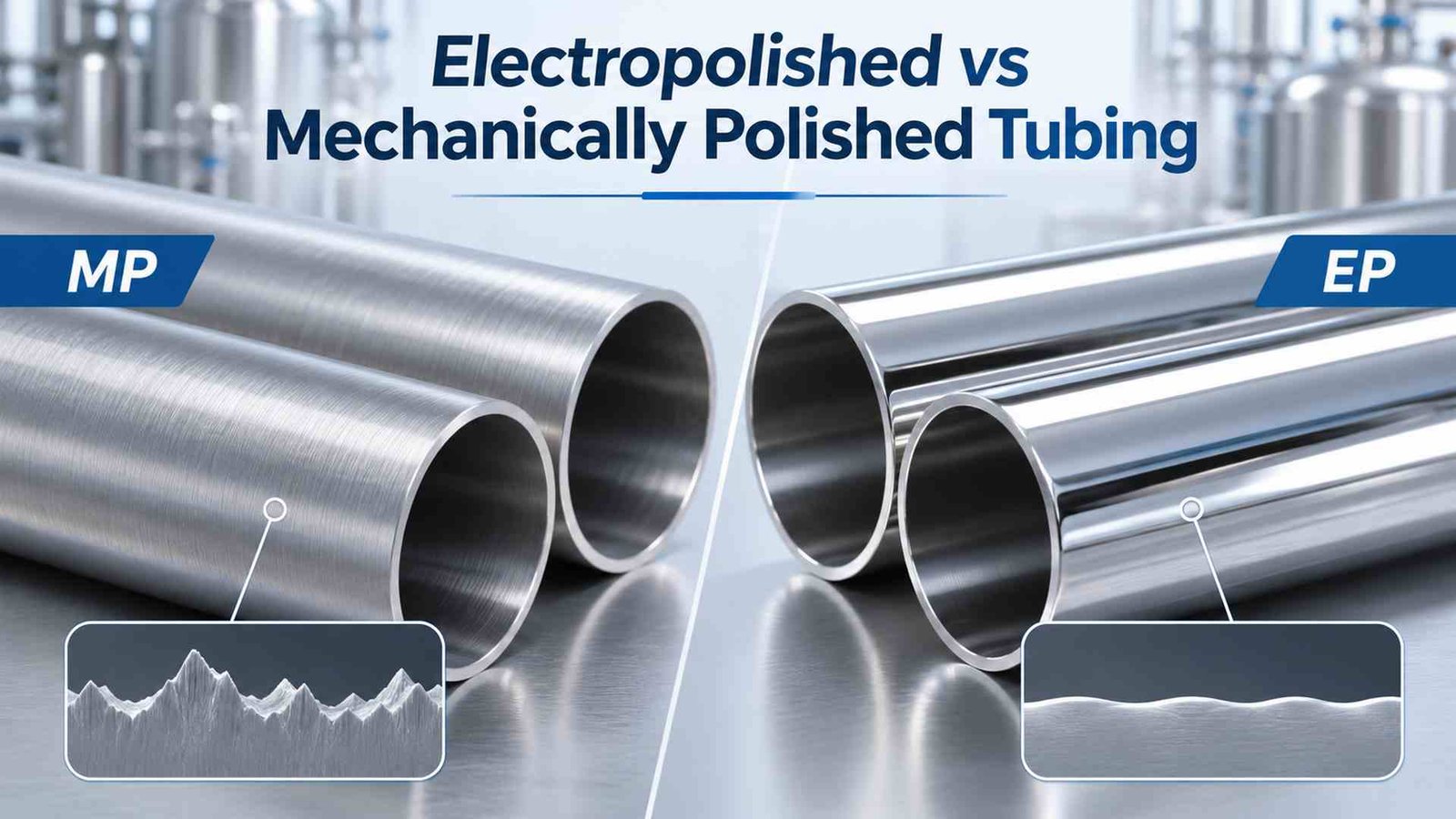
When comparing mechanical polishing and electropolishing, it’s crucial to understand their distinct material removal methods. Mechanical polishing involves abrasive action that alters surface roughness, creating microscopic peaks and valleys, while electropolishing relies on electrochemical processes to achieve a smoother finish. This difference greatly affects the surface appearance and overall performance of stainless steel tubing. Additionally, electropolishing enhances corrosion resistance by forming a chromium-rich passive layer, which is vital for applications in industries like biopharmaceuticals and food processing.
Although both mechanical polishing (MP) and electropolishing (EP) aim to enhance the surface finish of stainless steel tubing, they employ fundamentally different methods for material removal. Mechanical polishing utilizes abrasive materials to physically cut and smooth the surface, generating a refined finish through friction. This process can effectively remove surface imperfections but may introduce micro-scratches. In contrast, electropolishing operates through electrochemical dissolution, selectively removing microscopic surface material. This method involves submerging the tubing in an electrolytic solution, allowing for a uniform and controlled removal of material without the mechanical stresses associated with MP. As a result, EP not only improves aesthetics but also enhances corrosion resistance, providing you with a more consistent and durable surface finish. Additionally, electropolished surfaces can meet high purity options that facilitate efficient cleaning processes in various sanitary applications.
Surface roughness is a key factor in determining the quality and performance of stainless steel tubing after either mechanical polishing (MP) or electropolishing (EP). MP effectively reduces a rough surface to a target Ra, making it ideal for initial surface correction. However, if your starting surface is too poor, EP shouldn’t be viewed as a substitute for MP; it won’t correct significant flaws. Instead, EP excels in refining an already smoothed surface, enhancing corrosion resistance and cleanliness. The final result you achieve strongly depends on the initial quality of the tube. If you aim for peak performance, understanding these differences is essential for selecting the right polishing method for your application. Additionally, both polishing methods should ensure compliance with hygiene standards to maintain product safety in brewery applications.
While two stainless steel surfaces may measure the same Ra, their microscopic profiles can differ considerably, impacting performance. Mechanical polishing often leaves behind directional scratches, creating sharp peaks and valleys that can trap contaminants and affect fluid flow. These peaks may result in uneven wear and corrosion over time. In contrast, electropolishing smooths out these imperfections, resulting in a more uniform surface that minimizes sharp peaks and deep valleys. This enhanced uniformity reduces friction and facilitates better cleaning, making it ideal for hygienic applications. Additionally, electropolished surfaces are critical for maintaining hygiene control and ensuring compliance with industry standards. Therefore, even with identical Ra values, the performance of a mechanically polished surface may not match that of an electropolished one, emphasizing the importance of understanding these microscopic characteristics in your selection process.
The difference in surface appearance between mechanically polished and electropolished stainless steel tubing is significant and can influence both aesthetic and functional outcomes. Mechanically polished tubing typically has a satin or brushed finish with a directional appearance, while electropolished tubing is brighter, cleaner-looking, more reflective, and more uniform.
Here are three key distinctions:
Understanding these differences allows for informed choices in material selection.
How much does electropolishing truly enhance surface roughness? While electropolishing can reduce roughness, the degree of improvement hinges on several factors: the initial Ra, polishing quality, stainless steel grade, process parameters, electropolishing duration, and geometry. It’s essential to note that controlled applications often opt for a Mechanical Polish followed by Electropolish rather than treating raw tubing directly. For instance, a mechanically polished surface can be refined to a specific baseline Ra and then electropolished to enhance microscopic smoothness and surface chemistry. This two-step approach often yields better results, ensuring consistency and control over the final surface quality, which is important in demanding applications. As a result, electropolishing doesn't always guarantee a lower Ra without proper preparation. Additionally, the tubing's surface finishes such as mechanically polished (MP) and electropolished (EP) directly influence performance in hygienic applications.
When evaluating whether to use MP Only, EP Only, or MP + EP, it’s essential to take into account your application needs. MP Only is generally sufficient for standard sanitary applications, while EP is preferred for surfaces needing enhanced cleanliness and corrosion resistance. For high-purity environments, combining both methods can offer superior results, albeit at a higher cost. Additionally, utilizing products with 3-A SSI Sanitary Certification can further ensure compliance with hygiene and safety standards.
While electropolishing offers enhanced cleanliness and corrosion resistance, there are scenarios where mechanically polished (MP) stainless steel tubing is sufficient. Specifically, you’ll find MP is ideal for:
Additionally, MP is suitable for applications like high-frequency CIP cycles, as they still ensure good cleanliness without the added cost of electropolishing. Ultimately, the final suitability of MP tubing depends on your project standards and specific cleaning conditions. If your application doesn’t demand the superior properties of electropolishing, MP may be the cost-effective choice you’re looking for.
For applications demanding the highest levels of cleanliness and corrosion resistance, electropolishing is often the preferred choice. In sectors like pharmaceuticals and biotechnology, where contamination control is essential, electropolished stainless steel tubing provides a smooth, inert surface that minimizes particle adhesion. It’s particularly beneficial in high-purity process lines handling sensitive fluids and in aggressive cleaning environments, ensuring that no residual contaminants compromise system integrity. Electropolishing also enhances corrosion resistance, vital in applications exposed to harsh chemicals. By reducing surface roughness, it effectively lowers the risk of biofilm formation, thereby increasing overall system reliability. If you’re in industries with stringent cleanliness requirements, electropolishing should be your go-to method for tubing preparation. Additionally, compliance with ASTM A270 ensures that the tubing meets the necessary standards for ultra-high purity systems.
Choosing to combine mechanical polishing (MP) and electropolishing (EP) often results in ideal outcomes for applications that require both a controlled starting roughness and improved microscopic surface quality. This dual approach is especially beneficial in environments where purity and performance are paramount. Consider these key factors when selecting MP + EP:
How does the surface finish of stainless steel tubing impact its cleanability in sanitary applications? Cleanability is essential for minimizing residue adhesion, microbial retention, and product buildup. A smoother, more uniform surface reduces potential retention sites, enhancing the effectiveness of cleaning chemicals during Clean-In-Place (CIP) and Steam-In-Place (SIP) processes. Additionally, premium material selection plays a crucial role in determining the overall effectiveness of the tubing in maintaining hygiene standards.
| Surface Type | Cleanability Features |
|---|---|
| Mechanically Polished (MP) | Higher residue adhesion, more microbial retention |
| Electropolished (EP) | Lower residue adhesion, easier drainage, better chemical contact |
Electropolishing is often preferred in environments with repeated aggressive cleaning cycles, as it promotes superior cleanability and reduces maintenance needs, ensuring sanitation standards are consistently met.
While cleanability plays a notable role in maintaining sanitary conditions, corrosion resistance is another essential factor when selecting stainless steel tubing for various applications. The method of polishing can greatly affect corrosion performance. Here are three key points to take into account:
However, it’s important to note that electropolishing doesn’t guarantee immunity to corrosion. Material selection remains significant; for instance, 316L with EP isn’t suitable for all chloride concentrations or chemical exposures.
Although both mechanical polishing (MP) and electropolishing (EP) aim to enhance the surface finish of stainless steel tubing, they markedly differ in their impact on the passive chromium oxide layer. MP alters the surface geometry and can inadvertently introduce or expose contamination if not carefully controlled. In contrast, EP effectively removes free iron and surface contaminants, which improves the chromium-to-iron ratio at the surface. This process supports the formation of a more corrosion-resistant passive layer, enhancing the material's overall durability. While both processes relate to improving corrosion resistance, passivation is a distinct process that typically follows cleaning, focusing solely on developing the passive layer without altering surface geometry. Understanding these differences helps you make informed decisions for your applications. Additionally, the surface finish achieved through electropolishing techniques is critical for meeting the hygiene standards required in various industries, particularly food and pharmaceutical sectors.
When selecting between mechanical polishing (MP) and electropolishing (EP) for sanitary tubing applications, it’s crucial to contemplate the specific requirements of your project. The choice often hinges on factors like hygiene standards and the fluid being transported. Here are three key considerations:
Always verify that your final selection aligns with the piping specifications to maintain system integrity and performance.
In food and beverage tubing applications, selecting the right polishing method—mechanical polishing (MP) or electropolishing (EP)—is crucial for maintaining product integrity and meeting industry standards. MP is widely used due to its cost-effectiveness and adequate cleanability, typically achieving a roughness average (Ra) of 32 microinches. However, where hygiene requirements are higher, such as in dairy and brewery sectors, EP may be specified, offering superior cleanability and lower Ra values, often below 20 microinches. Both methods must resist CIP chemicals while preserving product characteristics. Customer specifications often dictate the choice, balancing performance, cost, and regulatory compliance. Understanding these factors guarantees the right decision for safe and efficient food and beverage processing. Additionally, food grade stainless steel is essential for ensuring durability and compliance with safety regulations in these applications.
The selection of polishing methods for pharmaceutical and biotech tubing is critical, similar to reflections in food and beverage applications. You need to take into account:
How does electropolishing enhance the sanitary characteristics of stainless steel? Electropolishing improves the surface finish by removing contaminants and micro-roughness, resulting in a smoother surface that reduces bacterial adhesion. However, achieving ideal sanitary performance isn't solely dependent on surface finish. Factors such as tube geometry, weld quality, and dead legs play critical roles in a piping system’s overall hygiene. Additionally, fittings, installation practices, drainage efficiency, material grade, and cleaning procedures greatly influence sanitary outcomes. It’s crucial to understand that while electropolishing contributes to a cleaner surface, it must be part of a thorough approach that addresses all these elements to guarantee a truly hygienic piping system. Surface finish alone won't guarantee sanitation. Furthermore, high-grade materials like TP304L and TP316L are essential for ensuring corrosion resistance and durability in sanitary applications.
Achieving the desired sanitary characteristics in stainless steel tubing goes beyond just electropolishing. When placing your order, avoid vague terms like “polished sanitary tube." Instead, be specific about your requirements. Consider including:
For example, you might specify:
ASTM A270 TP316L welded sanitary tube, 2-inch OD × 1.65 mm wall, ID mechanically polished to Ra .5 μm followed by electropolishing, OD bright annealed, 100% eddy current tested, EN 10204 3.1 certification. This level of detail guarantees you get the control and quality you need for sanitary applications. Additionally, referencing service manuals and data sheets can provide further insights into the specifications and requirements for your order.
When comparing mechanically polished (MP) and electropolished (EP) tubing, it's easy to make some common mistakes. Many focus solely on appearance or compare grit instead of the more relevant Ra values. It's essential to understand that both the starting tube quality and the specific application requirements play significant roles in your selection process. Additionally, you may want to consider the customization process to ensure that the tubing meets your specific needs.
Although a polished appearance might suggest superior hygiene, it's important to recognize that a brighter tube doesn't automatically equate to better cleanliness. When comparing mechanically polished (MP) and electropolished (EP) stainless steel tubing, consider the following aspects:
Additionally, the internal surface roughness of the tubing, which is controlled through processes such as Bright Annealing, plays a crucial role in preventing metallic ion leaching and maintaining cleanliness.
Choosing solely based on looks can lead to costly mistakes in applications where cleanliness and functionality are crucial. Always prioritize technical specifications and performance metrics over superficial qualities when making your decision.
Many often mistakenly rely on grit as a primary metric for comparing mechanically polished (MP) and electropolished (EP) stainless steel tubing, overlooking the more precise measurement of Ra (roughness average). Grit refers to the size of the abrasive particles used during the polishing process, serving only as a processing descriptor. It doesn't provide a quantifiable measure of surface characteristics. In contrast, Ra delivers a specific value that accurately reflects the surface roughness, allowing for more effective comparisons. By focusing on Ra, you gain a clearer understanding of surface integrity, ensuring it meets your project's specifications. This precision is essential in applications where surface finish considerably impacts performance and longevity, making Ra the preferred metric for informed decision-making.
Relying solely on electropolishing to address deep defects in stainless steel tubing can lead to significant misunderstandings about its capabilities. While electropolishing improves surface finish, it’s not a substitute for mechanical correction when dealing with deep scratches or weld irregularities. To guarantee ideal performance and quality, consider the following:
Understanding these factors guarantees you make informed decisions regarding your stainless steel tubing needs.
When specifying extremely low roughness average (Ra) values for stainless steel tubing without a clear application need, you risk incurring unnecessary costs and complications. Lower Ra values often lead to increased processing costs, and if there's no specific requirement for such precision, you're fundamentally investing in a finish that may not provide any functional advantage. When choosing your tubing, it's vital to match the surface finish to the system requirements rather than defaulting to the lowest Ra possible. This approach not only optimizes performance but also guarantees cost-effectiveness. By understanding the application needs, you can make informed decisions that align with both technical specifications and budget constraints, avoiding the pitfalls of over-specifying.
While it's easy to get caught up in the differences between mechanically polished (MP) and electropolished (EP) stainless steel tubing, overlooking the quality of the starting tube can lead to misguided comparisons. Remember, not all tubing is created equal. Here are three critical factors to contemplate:
How does the cost of electropolished (EP) tubing compare to mechanically polished (MP) options? Generally, MP tubing is the lowest cost due to fewer processing stages and simpler requirements. In contrast, EP tubing incurs higher expenses from additional processing, such as achieving specific Ra values and handling more complex inspections and documentation. Factors like tube diameter, length, and material grade also influence costs, with larger diameters and longer lengths amplifying expenses. While EP options are pricier upfront, consider the total lifecycle value; their enhanced corrosion resistance and cleanliness can lead to lower maintenance costs and longer service life. Ultimately, investing in EP might yield greater long-term savings compared to the initial purchase price of MP tubing.
When selecting between mechanically polished (MP), electropolished (EP), or a combination of both (MP + EP) stainless steel tubing, it’s important to evaluate your specific application needs. Choose MP for projects that require a cost-effective solution with basic surface finish requirements. Opt for EP when enhanced corrosion resistance and cleanliness are vital, while MP + EP offers the best of both worlds for demanding environments.
If standard hygienic cleanliness is all that's required for your project, you should consider mechanically polished (MP) stainless steel tubing. This option is ideally suited for applications where cost and specific requirements are essential. Here are a few reasons to choose MP:
Opting for electropolished (EP) stainless steel tubing makes sense in scenarios where enhanced surface quality and corrosion resistance are paramount. If your existing surface is already sufficiently smooth and you desire improved microscopic surface quality, EP is ideal. This process removes microscopic imperfections and guarantees a smoother finish, which greatly improves corrosion resistance. Additionally, if you're operating in an environment with strict contamination control requirements, EP provides a cleaner surface by eliminating embedded particles and contaminants. The electropolishing process creates a passive oxide layer that further protects against corrosion, making it suitable for applications in pharmaceuticals, food processing, and other sensitive industries. Ultimately, choosing EP helps maintain high standards in performance and longevity for your stainless steel tubing needs.
For applications demanding the utmost in surface quality and cleanliness, choosing a combination of mechanically polished (MP) and electropolished (EP) stainless steel tubing can be the best option. This hybrid approach guarantees peak performance in environments where precision is vital. You should consider MP + EP when:
The quality of the base tube is essential; after all, even the best surface treatment can't compensate for deficiencies in the tube's manufacturing process. Key factors like weld consistency, bead control, and dimensional tolerance directly impact the final product.
Here's a quick overview of what matters in base tube manufacturing:
| Factor | Importance |
|---|---|
| Weld Consistency | Guarantees structural integrity |
| Bead Control | Affects fluid flow and cleanliness |
| Dimensional Tolerance | Critical for fittings and assembly |
| Material Quality | Determines durability and performance |
These elements set the stage for successful mechanical polishing (MP) or electropolishing (EP). Consequently, focus on high-quality manufacturing to achieve the best results in your stainless steel tubing applications.
When selecting between mechanical polishing (MP), electropolishing (EP), or a combination of both, it’s essential to contemplate the specific requirements of your application. Each option serves distinct purposes that can impact performance and cost.
Understanding these distinctions will help you make an informed decision that aligns with your operational needs and regulatory standards, promoting ideal performance in your specific environment.
Choosing the right polishing method for stainless steel tubing is essential, as it directly influences performance, hygiene, and durability. Mechanically polished (MP) tubing primarily controls surface roughness, while electropolished (EP) tubing refines microscopic surfaces and enhances passive characteristics. A combination of MP and EP offers a balanced approach, leveraging both methods for excellent results. Your choice depends on specific factors like application, surface roughness (Ra), hygiene standards, and corrosion conditions. As a sanitary stainless steel tubing manufacturer, Yaolong provides tailored solutions, ensuring that your tubing meets exact specifications for material grade, surface finish, and inspection requirements. To get started, send your sanitary tube specification, including standard, material, OD, wall thickness, required Ra, MP/EP preference, application, and quantity, so Yaolong can recommend the best finish. Additionally, you can reach out to us via email for inquiries to discuss your specific needs and receive expert guidance.
Yes, you can combine mechanical and electropolishing on the same tubing. This dual approach can enhance surface finish and corrosion resistance, giving you more control over the final product’s performance and aesthetic appeal.
Temperature markedly influences the electropolishing process. Higher temperatures can enhance efficiency and improve surface quality, but excessive heat may lead to undesirable results like pitting or discoloration. Maintaining ideal temperature is essential for achieving desired outcomes.
There's no specific thickness for coatings after polishing; it varies based on the polishing method and material. Typically, you can expect minimal thickness due to the removal of surface imperfections rather than significant coating application.
You'll need a variety of tools for mechanical polishing, including grinders, buffers, polishing compounds, and pads. Notably, mechanical polishing can achieve a surface roughness as low as 0.1 microns, ensuring precise control over finish quality.
The electropolishing process typically takes a few hours, depending on the material's dimensions and desired finish. You can expect to achieve ideal results within this timeframe, ensuring a smooth, corrosion-resistant surface for your application.