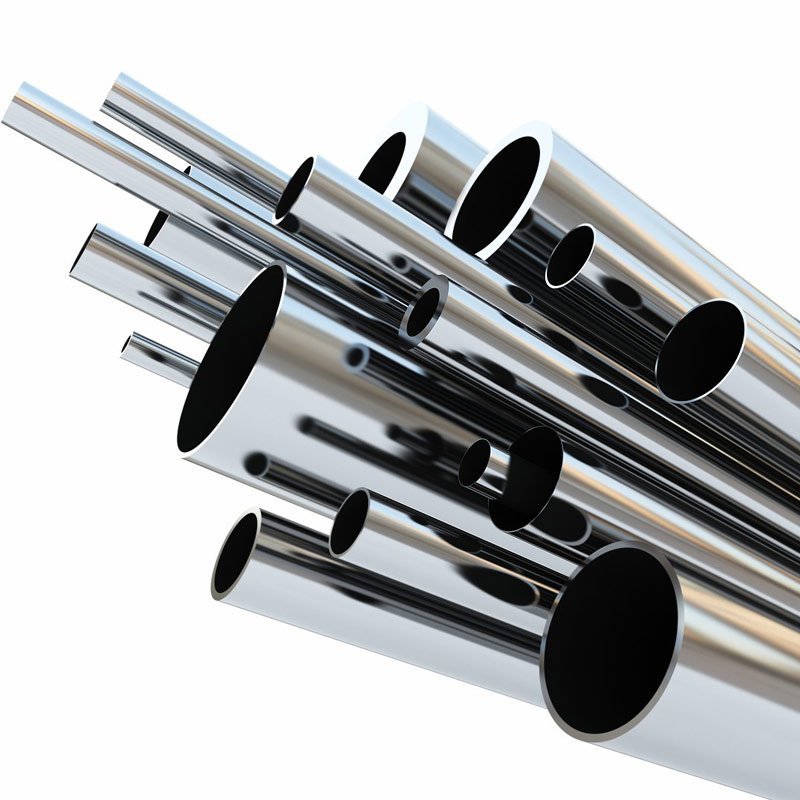
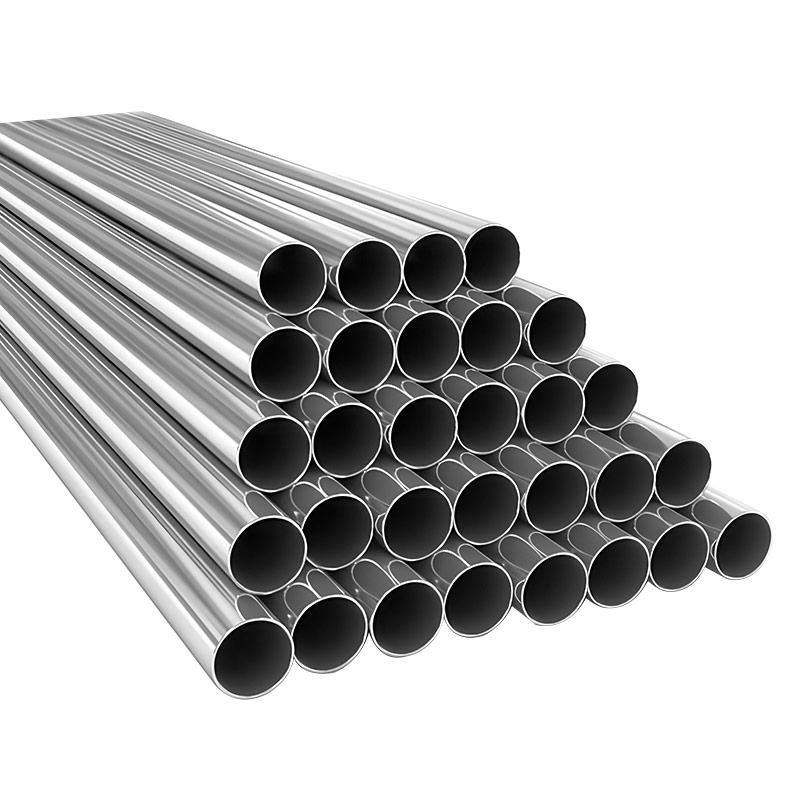
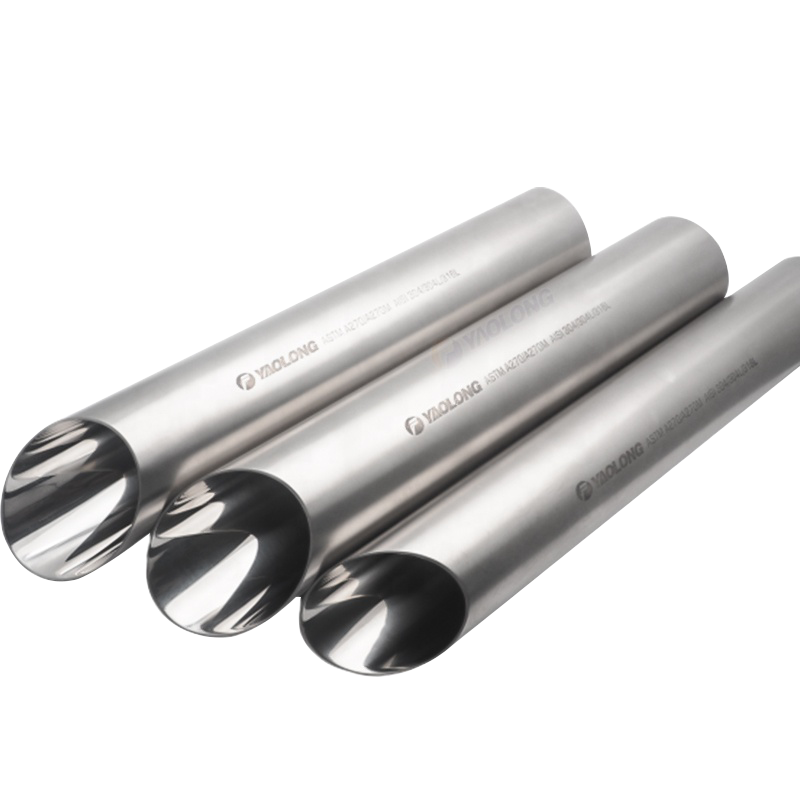
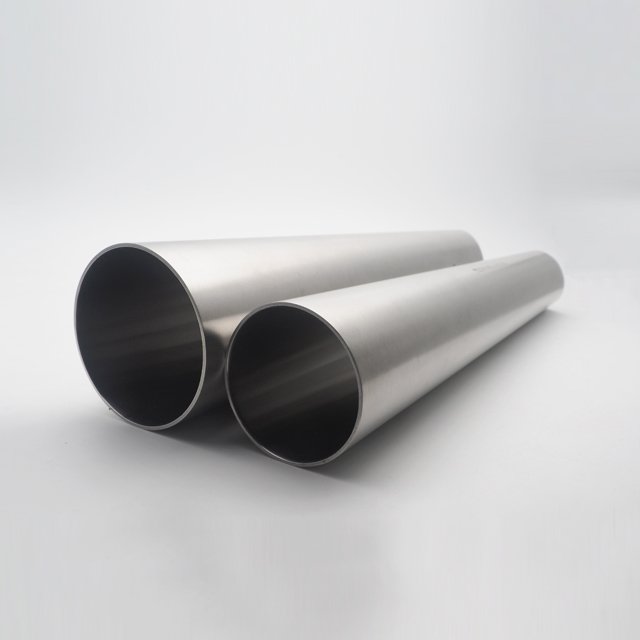
Yaolong’s food-grade stainless steel sanitary tube is manufactured from premium 304/304L and 316/316L stainless steel in strict compliance with ASTM A270 and 3-A Sanitary Standards. Available in standard sizes from 1/2 inch to 12 inches in diameter, the tubing provides excellent corrosion resistance, structural integrity, and hygienic performance for reliable liquid.
Surface finishes are measured in accordance with ASME/ANSI B46.1, with profilometer readings taken at 90 degrees to the major polishing pattern to ensure consistent surface roughness. With options suitable for demanding acidic and high-salinity environments, Yaolong’s food-grade stainless steel sanitary tubing helps meet stringent food safety and cleanliness requirements while supporting long-term, cost-effective operation.
The inner surface is precision-finished, achieving Ra ≤ 0.8 μm (32 μin) or Ra ≤ 0.5 μm (20 μin) via mechanical polishing (MP), and down to Ra ≤ 0.4 μm (15 μin) through electropolishing (EP). This ultra-smooth interior eliminates fluid dead zones, prevents bacterial buildup, and simplifies CIP (Clean-in-Place) processes, making it ideal for food and beverage processing, dairy production, brewing systems, and condiment manufacturing.
Standard | ASTM A270, 3-A Sanitary Standards, DIN 11850, ISO 2037 |
Material | 304 / 304L (Standard Food Grade) / 316 / 316L (Acid & Salt Resistant) |
Surface Finish | Mechanical Polish (MP), Electropolish (EP) |
Manufacturing | Welded sanitary tubing / Seamless sanitary tubing |
OD Size | OD 1/2"–4" (DN10–DN100), other sizes available on request |
Wall Thickness | Standard wall thickness per ASTM A270 or customized thickness on request |
Polishing Grade | 180 grit / 240 grit / 320 grit / BA |
Ra Value | Mechanical Polish (MP): Ra ≤ 0.8 μm (32 μin) / Ra ≤ 0.5 μm (20 μin) Electropolish (EP): Ra ≤ 0.4 μm (15 μin) |
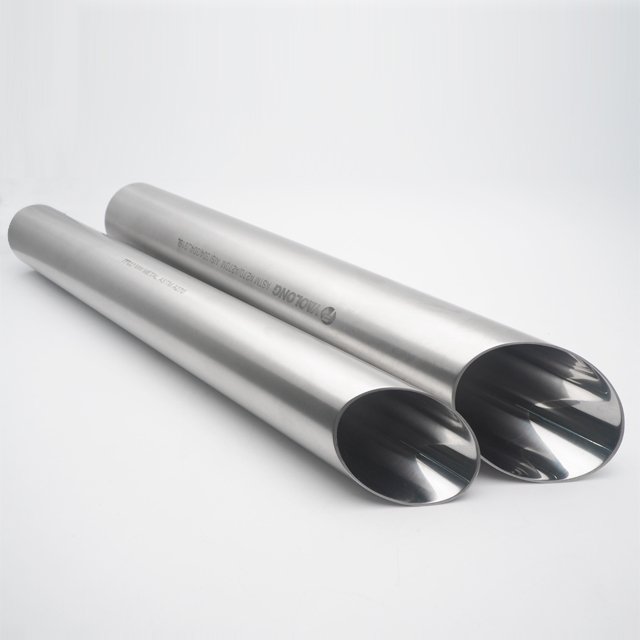
Our food grade ASTM A270 stainless steel sanitary tubing is manufactured strictly from prime 304/304L and 316/316L raw materials, offering 100% heat number traceability and EN 10204 3.1 Mill Test Certificates (MTC). The entire manufacturing chain—from strip inspection, precision TIG welding, and solution annealing to final internal polishing—is executed under standardized quality systems. Dimensional tolerances, wall thickness uniformity, and inner surface smoothness fully comply with ASTM A270 and 3-A sanitary standards, ensuring strict compliance with global food safety regulations.
To ensure the highest surface quality, our food-grade sanitary tubing goes beyond the requirements of ASTM A269 and A270 by performing the full battery of ASTM bend and deformation tests required by ASME SA249. The tests, combined with specific raw material requirements, Eddy Current testing at the tube mill, 100% borescoping prior to mechanical polish, and tighter OD and wall tolerances, allows for a more consistent, superior quality product.
To guarantee zero-defect fluid delivery, every batch of food-grade sanitary tubing undergoes rigorous quality inspections, including dimensional verification, visual checks, and inner surface roughness (Ra) testing. According to customer and project specifications, we conduct non-destructive Eddy Current Testing (ECT) and hydrostatic testing to verify 100% weld line integrity, ensuring complete resistance to leakage and pressure fatigue. Detailed inspection reports and MTC documentation are supplied with every shipment for seamless project approval and audit compliance.
To meet strict hygiene protocols in food processing, our food -grade sanitary stainless steel tubing is available in various mechanical polish (MP) and electropolish (EP) options. Internal surface roughness is tightly controlled at Ra ≤ 0.8 μm (32 μin) for standard lines, Ra ≤ 0.5 μm (20 μin) for high-hygiene food processing, and Ra ≤ 0.4 μm (15 μin) with EP treatment. The ultra-smooth interior prevents media adhesion and bacterial growth, significantly reducing downtime and water consumption during CIP (Clean-in-Place) and SIP (Sterilization-in-Place) cycles.
All ASTM A270 food-grade sanitary tubes undergo full solution annealing at temperatures above 1040°C followed by rapid quenching. This process completely restores maximum corrosion resistance, eliminates residual welding stress, and enhances material ductility. For sensitive food and beverage applications, we supply Bright Annealed (BA) tubing, which features a mirror-like, oxide-free internal finish that minimizes surface micro-voids and optimizes total process hygiene.
304 / 304L Food-grade Stainless Steel Tubing: Offers excellent general corrosion resistance and outstanding cost-efficiency. It is the primary standard choice for drinking water, beer brewing, beverage filling, and general food processing lines under neutral pH conditions.
316 / 316L Food-grade Stainless Steel Tubing: Enhanced with 2-3% Molybdenum and lower carbon content, providing superior pitting resistance against chlorides, organic acids, and aggressive chemical cleaning agents. Highly recommended for dairy processing, soy sauce, ketchup, edible oil, and high-salinity food environments.
Engineered for hygienic liquid transport, our food grade stainless steel tubing integrates seamlessly with standard sanitary fittings, Tri-Clamp ferrule connections, and sanitary valves. Key applications include:
To prevent contamination and mechanical scratches during international transit, each food-grade tube is capped with plastic end protectors and individually wrapped in protective polyfilm. Tubes are bundled and reinforced with heavy-duty woven bags or custom seaworthy wooden cases and steel-framed pallets. Every bundle carries a waterproof shipping tag indicating outer diameter, wall thickness, material grade, standard, and heat number, ensuring rapid warehouse identification and full supply chain traceability.
| Grade | C (max) | Si (max) | Mn (max) | Cr | Ni | Mo | S (max) | P (max) | Fe |
| 304 | 0.035 | 0.75 | 2 | 18.0–20.0 | 8.0–13.0 | N/A | 0.03 | 0.04 | Balance |
| 316L | 0.035 | 0.75 | 2 | 16.0–18.0 | 10.0–15.0 | 2.0–3.0 | 0.03 | 0.04 | Balance |
| Size (OD) | OD (mm) | Wall Thickness (in) | Wall Thickness (mm) | OD Tolerance (in) | OD Tolerance (mm) | WT Tolerance | Length Tolerance (in / mm) | ID Surface Finish (Ra) | OD Surface Finish (Ra) |
| 1/2" | 12.7 | 0.065 | 1.65 | ±0.005 | ±0.13 | ±10% | +1/8", -0 (+3.18mm, -0) | 20 μin (0.51 μm) / 15 μin (0.38 μm EP) | 32 μin (0.81 μm) |
| 3/4" | 19.05 | 0.065 | 1.65 | ±0.005 | ±0.13 | ±10% | +1/8", -0 (+3.18mm, -0) | 20 μin (0.51 μm) / 15 μin (0.38 μm EP) | 32 μin (0.81 μm) |
| 1" | 25.4 | 0.065 | 1.65 | ±0.005 | ±0.13 | ±10% | +1/8", -0 (+3.18mm, -0) | 20 μin (0.51 μm) / 15 μin (0.38 μm EP) | 32 μin (0.81 μm) |
| 1½" | 38.1 | 0.065 | 1.65 | ±0.008 | ±0.20 | ±10% | +1/8", -0 (+3.18mm, -0) | 20 μin (0.51 μm) / 15 μin (0.38 μm EP) | 32 μin (0.81 μm) |
| 2" | 50.8 | 0.065 | 1.65 | ±0.008 | ±0.20 | ±10% | +1/8", -0 (+3.18mm, -0) | 20 μin (0.51 μm) / 15 μin (0.38 μm EP) | 32 μin (0.81 μm) |
| 2½" | 63.5 | 0.065 | 1.65 | ±0.010 | ±0.25 | ±10% | +1/8", -0 (+3.18mm, -0) | 20 μin (0.51 μm) / 15 μin (0.38 μm EP) | 32 μin (0.81 μm) |
| 3" | 76.2 | 0.065 | 1.65 | ±0.010 | ±0.25 | ±10% | +1/8", -0 (+3.18mm, -0) | 20 μin (0.51 μm) / 15 μin (0.38 μm EP) | 32 μin (0.81 μm) |
| 4" | 101.6 | 0.083 | 2.11 | ±0.015 | ±0.38 | ±10% | +1/8", -0 (+3.18mm, -0) | 20 μin (0.51 μm) / 15 μin (0.38 μm EP) | 32 μin (0.81 μm) |
| 6" | 152.4 | 0.109 | 2.77 | ±0.030 | ±0.76 | ±10% | +1/8", -0 (+3.18mm, -0) | 20 μin (0.51 μm) / 15 μin (0.38 μm EP) | 32 μin (0.81 μm) |
| 8" | 203.2 | 0.109 | 2.77 | ±0.040 | ±1.02 | ±10% | +1/8", -0 (+3.18mm, -0) | 32 μin (0.81 μm) | 32 μin (0.81 μm) |
304 / 304L Food-grade Stainless Steel: The most cost-effective standard choice for general food and beverage processing. It is ideal for neutral pH environments, such as drinking water, milk, fruit juice, and beer brewing lines.
316 / 316L Food-grade Stainless Steel: Contains 2–3% Molybdenum and lower carbon content, offering superior resistance to chlorides (salt), organic acids, and aggressive chemical cleaning agents. It is strongly recommended for dairy, ketchup, soy sauce, edible oils, and high-salinity food processing lines.
Dimensional System: Sanitary tubing is specified by exact Outer Diameter (OD) and Wall Thickness to ensure seamless fit with Tri-Clamp fittings and sanitary valves. Industrial pipe relies on Nominal Pipe Size (NPS/NB).
Surface Finish & Cleanability: Sanitary tubing requires precision internal polishing (Ra ≤ 0.8 μm or lower) to eliminate micro-voids, prevent bacterial growth, and support Clean-in-Place (CIP) procedures. Industrial pipe internal surfaces are typically unpolished (2B/HR).
Weld Line Integrity: Sanitary tubing undergoes internal weld bead flattening, solution annealing, and non-destructive testing to guarantee a smooth, crevice-free internal weld seam.
Standard Food & Beverage: Internal surface roughness is typically specified at Ra ≤ 0.8 μm (32 μin) using 180/240 grit mechanical polishing.
High-Hygiene Food & Dairy: Requires Ra ≤ 0.5 μm (20 μin) via precision mechanical polishing or Ra ≤ 0.4 μm (15 μin) through Electropolishing (EP).
Why It Matters: An ultra-smooth interior prevents media adhesion and bacterial biofilm attachment while maximizing CIP/SIP cleaning efficiency and reducing washdown water consumption.
ASTM A270: The primary American specification covering seamless and welded austenitic stainless steel sanitary tubing.
3-A Sanitary Standards: Strict North American hygiene criteria ensuring tube design, dimensions, and surface finishes meet high dairy and food safety requirements.
DIN 11850 / ISO 2037: Widely accepted European and global metric standards for stainless steel tubes used in food, beverage, and chemical processing.
Each shipment includes a complete quality documentation package:
EN 10204 3.1 Mill Test Certificate (MTC) detailing chemical composition and mechanical properties.
100% Heat Number Traceability marked directly on each tube for full supply chain tracking.
Non-Destructive Test Reports: Eddy Current Testing (ECT) or Hydrostatic Testing reports to verify weld integrity.
Surface Roughness (Ra) Inspection Report certifying internal and external polishing quality.